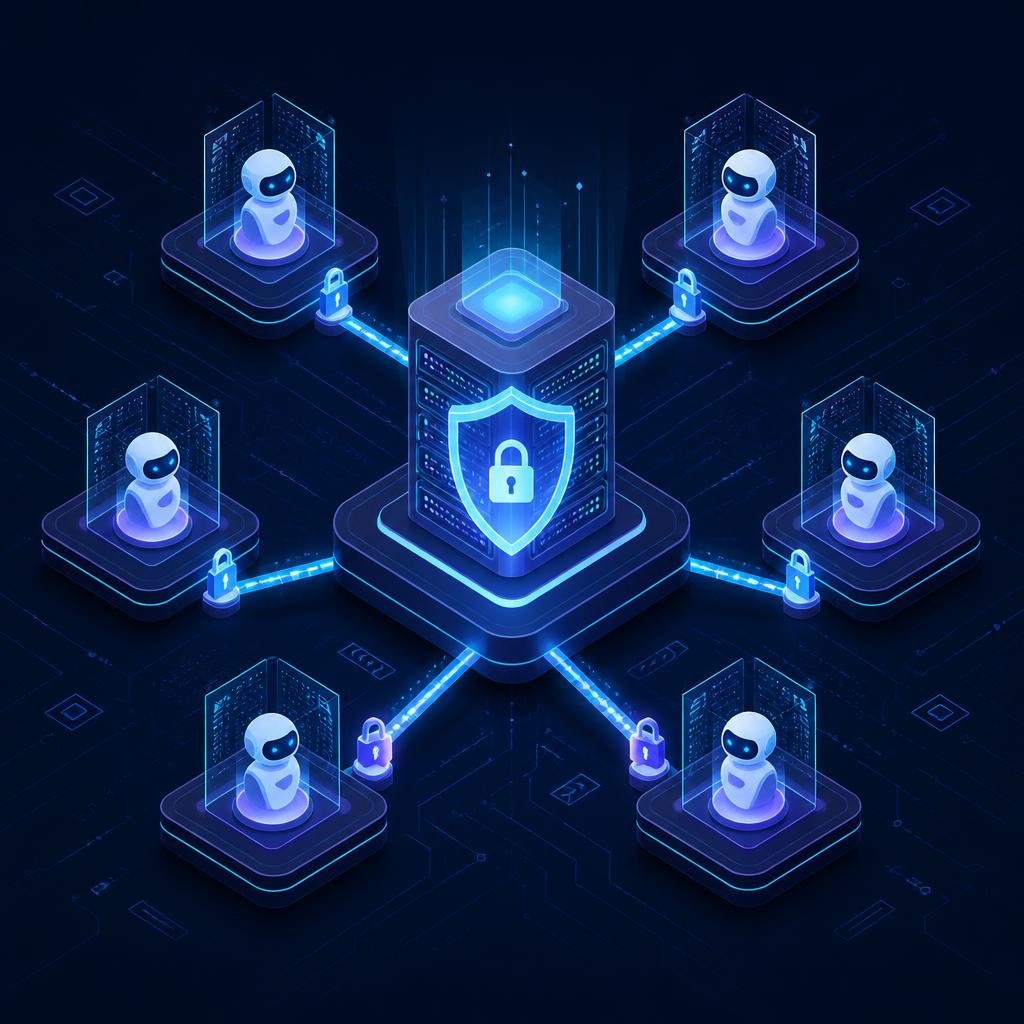
The Risks of AI Agents Without Monitoring: What Unobserved Autonomy Costs Enterprises in 2026
Unmonitored AI agents create silent, compounding risk — runaway token spend, data exfiltration, prompt injection, hallucinated actions, non-human identity sprawl, and audit gaps. A practical 2026 guide to the twelve risks of running AI agents without monitoring, the warning signs, and the observability and runtime controls that close them.
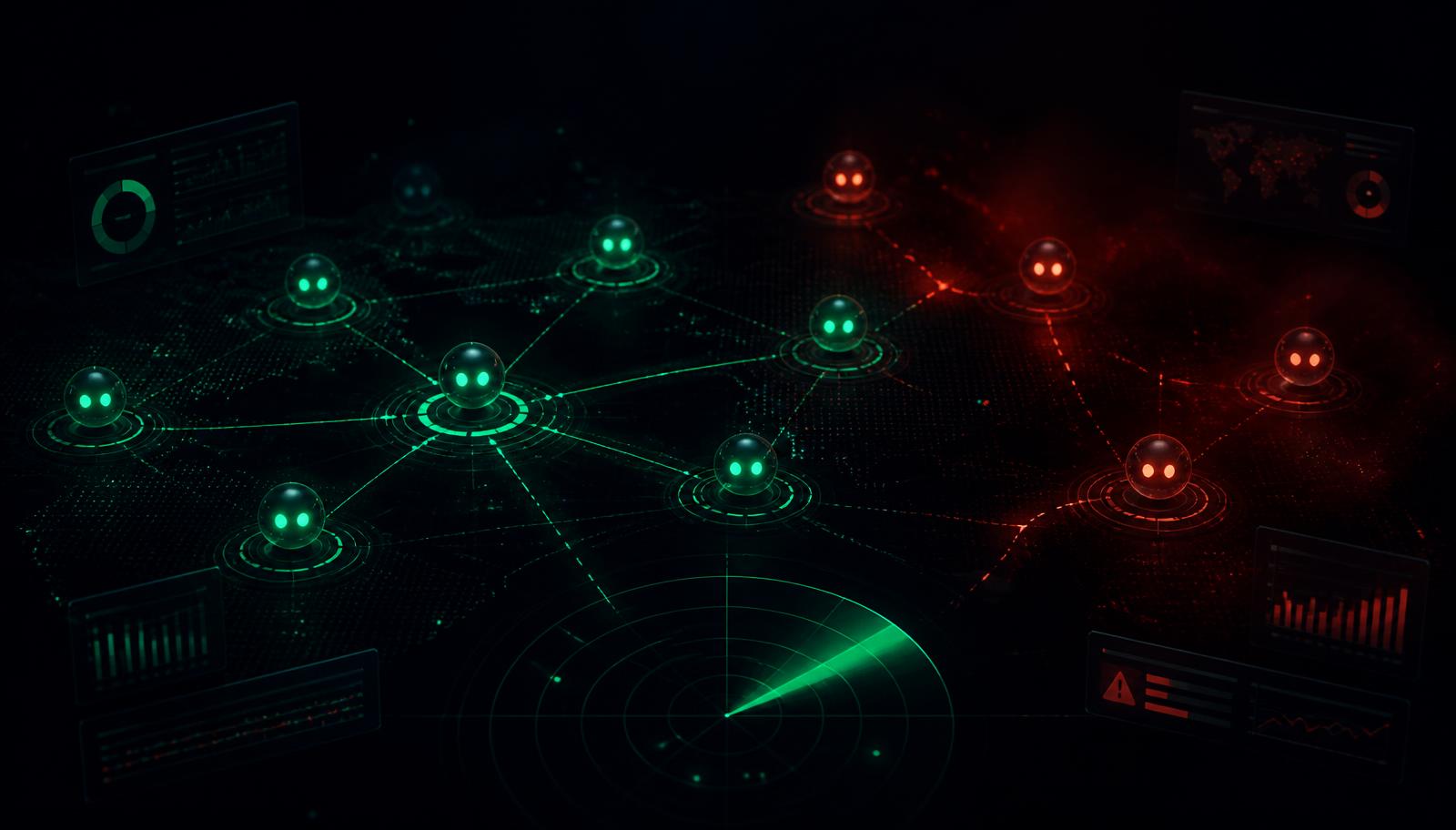
Autonomous AI agents are now doing real work inside enterprises: closing tickets, reconciling invoices, writing and merging code, moving data between systems, and calling external APIs on behalf of employees who never see the intermediate steps. The difference between an agent that creates leverage and an agent that creates a breach is almost never the model — it is whether anyone can see what the agent is doing while it does it. This guide catalogs the concrete risks of running AI agents without monitoring, how each one typically surfaces, and the controls that close it.
What 'unmonitored' actually means
Teams often believe they have monitoring because the LLM provider dashboard shows token counts, or because application logs record that an agent ran. That is telemetry about infrastructure, not about behavior. An agent is unmonitored when you cannot answer these six questions for any given minute of its operation: what was it trying to accomplish, which tools and systems did it touch, what data entered and left the model, which identity did it act under, what did it cost, and did any policy decision evaluate the action before it executed. If any answer requires reconstructing events from scattered logs after the fact, the agent is effectively unmonitored.
Risk 1: Runaway token spend and cost incidents
The most common first incident is financial. An agent enters a reasoning loop, retries a failing tool, or fans out into recursive sub-agents, and consumes millions of tokens before anyone notices. Because spend is invoiced monthly and pooled across teams, the anomaly is usually discovered days later on a bill rather than in the moment. Without per-agent, per-session, and per-day budget enforcement, the blast radius is limited only by your provider's rate limit — and burning through that quota also degrades every other production workload sharing the key.
Risk 2: Irreversible actions with no approval gate
Agents with write access do not distinguish between a reversible action and a permanent one unless you tell them. Refunds, wire transfers, production deploys, database deletions, contract sends, and customer emails are all one tool call away. Unmonitored environments have no inline checkpoint that flags high-blast-radius actions for human approval, so the first signal that something went wrong is a customer, a finance controller, or an on-call engineer reporting the consequence.
Risk 3: Silent data exfiltration to third-party models
Retrieval-augmented agents pull from wherever they are pointed — CRM records, ticket histories, source repositories, shared drives. Every retrieved chunk is sent to a model endpoint. Without output and payload inspection, customer PII, PHI, source code, pricing, or credentials routinely leave the environment inside prompts and never appear in a DLP report, because DLP watches files and email, not model context windows. This is the risk that most frequently converts an AI experiment into a reportable privacy incident.
Risk 4: Prompt injection that goes undetected
When an agent reads untrusted content — a web page, a PDF, an inbound email, a Jira comment, an MCP tool response — that content can contain instructions the agent follows. An injected instruction can redirect the agent to exfiltrate context, call a dangerous tool, or ignore its guardrails. Unmonitored agents make injection nearly invisible: the agent behaves 'correctly' relative to its poisoned instructions, the logs look like normal activity, and there is no baseline to compare against. Detection requires seeing the relationship between untrusted input, changed intent, and subsequent tool calls.
Risk 5: Hallucinated actions treated as facts
Hallucination is a content problem in a chatbot and an operational problem in an agent. An agent that hallucinates a customer's account tier, an invoice amount, a config value, or an API parameter will act on that fabrication, and downstream systems will accept it as authoritative. Without output validation against systems of record, hallucinated data propagates into CRMs, ledgers, and tickets, where it becomes expensive to unwind and hard to trace back to the originating run.
Risk 6: Non-human identity sprawl and over-permissioned agents
Agents typically inherit a shared service account created during a pilot, with broad scopes nobody has revisited. Multiply that by every team shipping agents and you get a population of powerful non-human identities with no owner, no expiration, no least-privilege review, and no per-agent attribution. When an incident happens, you cannot answer the first forensic question — which agent, acting under which identity, took this action — because dozens share the same credential.
Risk 7: Shadow agents nobody approved
Employees build agents in low-code tools, IDE extensions, and personal API keys. Unmonitored organizations have no inventory, so these agents operate against production data outside every control the security team believes is in place. Shadow agents are the single largest gap between the AI risk register on paper and the AI actually running in the environment.
Risk 8: MCP servers and tool supply-chain exposure
The Model Context Protocol made it trivial to give agents new capabilities, and equally trivial to connect an unvetted server. A malicious or compromised MCP server can return poisoned tool descriptions, harvest whatever context the agent passes, or silently expand what the agent is able to do. Without monitoring the tool catalog and every tool call, this supply chain is unaudited by definition.
Risk 9: Agent-to-agent cascades
Multi-agent systems fail in ways single agents do not. One agent's incorrect output becomes another's trusted input; a planner spawns workers that spawn workers; a retry storm in one component saturates a shared downstream API. Unmonitored, these cascades look like a general slowdown or an unexplained spike, and root cause analysis is guesswork because no trace links the parent intent to the child actions.
Risk 10: No incident response path
Ask a team running unmonitored agents how they would stop an agent that is actively causing harm at 2 a.m. The common answers — rotate the API key, redeploy the service, disable the integration — are slow, coarse, and take other systems down with them. Without a per-agent kill switch and quarantine capability, containment means an outage, so teams hesitate, and hesitation extends the incident.
Risk 11: Compliance and audit failure
NIST AI RMF, ISO/IEC 42001, the EU AI Act, SOC 2, HIPAA, and GDPR all converge on the same expectations: know what AI systems you operate, control what they can do, and prove what they did. An unmonitored agent fails all three. When an auditor asks for the activity history of a specific AI system during a specific window, reconstructed application logs without policy decisions, identity attribution, or tamper evidence do not satisfy the request — and the finding lands on the organization, not the vendor.
Risk 12: Erosion of trust and stalled AI programs
The quietest cost is strategic. One visible agent failure — a wrong customer email, a leaked document, a surprise invoice — is usually enough for leadership to freeze the AI roadmap. Organizations that instrument agents from day one keep shipping because they can demonstrate control; organizations that do not spend the next two quarters explaining a single incident.
Warning signs you are running unmonitored agents
Several symptoms reliably indicate the gap. LLM spend cannot be attributed to a specific agent or team. Nobody can produce a current list of agents running in production. Agents share a service account or a single API key. There is no way to see the tool calls an agent made in a given run, only the final output. Guardrails exist only as instructions inside system prompts. There is no defined procedure to stop a single agent without an outage. And no evidence package exists that could be handed to an auditor tomorrow.
What real AI agent monitoring looks like
Effective monitoring operates on AI-native primitives rather than infrastructure metrics. It captures intent — the goal the agent is pursuing — alongside every prompt, retrieved document, tool call, parameter, output, and cost, tied to a unique agent identity and a trace that links parent and child actions. It baselines normal behavior per agent so deviations (new tools, unusual data volumes, off-hours activity, sudden token growth) raise alerts. And critically, it is inline: the monitoring layer sits in the request path so it can redact, require approval, throttle, block, or terminate — not merely record. Observability that only reports after execution reduces investigation time; it does not reduce risk.
The control set that closes these risks
Seven controls address every risk in this guide. First, a continuous AI asset inventory covering models, agents, MCP servers, and shadow tools. Second, per-agent non-human identity with least-privilege scopes and expiry. Third, policy-as-code evaluated on every tool call and every output, versioned and reviewable. Fourth, token and cost guardrails at request, session, and daily granularity. Fifth, behavioral anomaly detection with per-agent baselines. Sixth, a one-click kill switch and quarantine that isolates a single agent without collateral outage. Seventh, immutable, tamper-evident audit logs with policy-decision reason strings, mapped to the frameworks you report against.
A 30-day plan to eliminate unmonitored agents
Week one: run discovery and produce a complete inventory of every agent, model endpoint, MCP server, and API key in use; assign an owner to each. Week two: give every agent its own identity, strip inherited permissions down to least privilege, and turn on full-fidelity tracing of prompts, tool calls, and outputs in observe mode. Week three: enable enforcement on the highest-risk paths — outbound sensitive data, irreversible tool calls, unapproved tools — plus token and cost caps, and test the kill switch in a game day. Week four: generate an evidence package for your framework of record, review it with internal audit, and set a recurring cadence for inventory drift and policy review.
Where Watch Tower Agents fits
Watch Tower Agents is the runtime governance and security control plane built for exactly this problem. It continuously discovers every agent, model, and MCP server in your environment, issues least-privilege identities, traces intent through every tool call and output, enforces policy-as-code inline before an action executes, applies token and cost guardrails, detects behavioral drift and prompt injection, provides a per-agent kill switch, and writes cryptographically verifiable audit logs pre-mapped to NIST AI RMF, ISO/IEC 42001, OWASP LLM Top 10, SOC 2, HIPAA, GDPR, and the EU AI Act. It deploys as SaaS, in your VPC, or fully air-gapped for government, defense, and critical-infrastructure environments.
Frequently asked questions
What are the biggest risks of AI agents without monitoring?
The highest-impact risks are runaway token spend, irreversible actions taken without approval, silent data exfiltration to third-party models, undetected prompt injection, hallucinated actions written into systems of record, over-permissioned non-human identities, shadow agents nobody approved, MCP tool supply-chain exposure, multi-agent failure cascades, no containment path during an incident, and compliance failure because no audit evidence exists.
Isn't logging prompts and responses enough monitoring?
No. Prompt logs tell you what was said, not what was done. Real AI agent monitoring captures intent, every tool call and parameter, the data entering and leaving the model, the identity the agent acted under, the cost of the run, and the policy decision applied to each action — and it can block an action inline rather than describing it afterward.
How do unmonitored AI agents cause compliance failures?
NIST AI RMF, ISO/IEC 42001, the EU AI Act, SOC 2, HIPAA, and GDPR all require knowing which AI systems you run, controlling what they can do, and proving what they did. Without per-agent identity, policy-decision records, and tamper-evident logs, an organization cannot produce the activity history an auditor or regulator asks for, and the finding falls on the organization rather than the model vendor.
How much can a runaway AI agent cost?
It is bounded only by your provider rate limits. Recursive sub-agent fan-out and retry loops can consume millions of tokens per hour, and because usage is billed monthly and often pooled, the anomaly is usually found on an invoice days later. Per-request, per-session, and per-day cost caps are the only reliable ceiling.
What is a shadow AI agent and why is it dangerous?
A shadow agent is one built outside official channels — in a low-code tool, an IDE extension, or on a personal API key — that touches production data without appearing in any inventory. It operates outside every control the security team believes is in place, and it is invisible during incident response and audits.
Can monitoring stop prompt injection?
Monitoring with inline enforcement can. When the platform correlates untrusted input with a change in agent intent and evaluates policy on the resulting tool call, it can block the dangerous action, redact sensitive context, or quarantine the agent before harm occurs. Passive logging only tells you afterward that it happened.
What should we monitor first if we're just starting?
Start with inventory and identity: list every agent and give each one its own least-privilege credential. Then turn on full tracing of tool calls and outputs in observe mode, add token and cost caps, and enable blocking on the three highest-risk paths — sensitive data leaving the environment, irreversible tool calls, and unapproved tools.
How quickly can an enterprise close the monitoring gap?
About 30 days in our field experience: one week for discovery and inventory, one week for per-agent identity and full-fidelity tracing in observe mode, one week to enable enforcement and cost guardrails and test the kill switch, and one week to produce the first audit evidence package and set the recurring review cadence.
Govern your agents before they ship
See WatchTower running on your stack in a 30-minute walkthrough.