AI Agent Guardrails: The Complete Guide to Token, Cost, and Safety Controls in 2026
A practical, framework-aligned guide to AI agent guardrails in 2026 — input and output filters, token and cost caps, tool-call allow-lists, PII and secret redaction, hallucination and prompt-injection defense, human-in-the-loop gates, and audit evidence that maps to NIST AI RMF, ISO/IEC 42001, SOC 2, and the EU AI Act.

AI agent guardrails are the single most important safety control layer in a modern agentic system. Once an LLM can call tools, spend money, touch customer data, or take irreversible actions, the friendly-sounding phrase 'add some guardrails' becomes production security engineering. This guide covers what AI agent guardrails actually are in 2026, the seven categories every enterprise-grade agent needs, how token and cost guardrails work in practice, the anti-patterns that fail in audits, and how to map the whole program to NIST AI RMF, ISO/IEC 42001, SOC 2, HIPAA, GDPR, and the EU AI Act. It is written for CISOs, AI platform leads, and the engineers building agents day to day.
What are AI agent guardrails?
AI agent guardrails are runtime controls placed around an agent's inputs, reasoning, tool calls, and outputs to keep behavior inside a defined policy envelope. They are not the model, they are not the system prompt, and they are not a vendor's default safety filter. Guardrails are independent enforcement points — implemented in a gateway, a middleware, or a dedicated policy engine — that inspect every request and response, apply deterministic rules, and either allow, block, redact, rewrite, or escalate the action. The distinction matters: a system-prompt instruction like 'never share PII' is a suggestion the model may or may not follow. A guardrail that pattern-matches PII on the wire and blocks the response is an enforceable control. Auditors, regulators, and incident-response teams only credit the second.
Why guardrails matter more than the model choice
Enterprises spend months choosing between GPT, Claude, Gemini, and open-weight models. In practice, the model choice rarely determines whether an agent is safe in production — the guardrail layer does. Every frontier model can be prompt-injected, every model can hallucinate, every model can be talked into calling an expensive tool in a loop, and every model can leak training data or retrieved context under the right conditions. What separates a production-safe agent from a liability is whether the surrounding runtime enforces token budgets, tool allow-lists, PII redaction, output validation, and human-in-the-loop gates deterministically — regardless of which model is behind them. Treat the guardrail layer as the primary control surface and the model as a swappable component.
The seven categories of AI agent guardrails
A defensible 2026 guardrail program covers seven categories. One: input guardrails, which inspect the incoming user request and any retrieved context for prompt injection, jailbreak patterns, off-topic drift, and disallowed content before the model ever sees them. Two: token and cost guardrails, which cap tokens per request, per session, per agent, per user, and per day, and abort or degrade before spend or quota is exhausted. Three: tool-call guardrails, which enforce allow-lists, parameter validation, egress destinations, rate limits, and spend budgets on every tool call the agent attempts. Four: data guardrails, which detect and redact PII, PHI, PCI, secrets, and internal identifiers on both the prompt and the completion path. Five: output guardrails, which validate structure, check for hallucinations against grounded sources, and block toxic, biased, or policy-violating content. Six: behavioral guardrails, which baseline normal patterns and flag anomalies such as new tools, off-hours activity, or data-volume spikes. Seven: human-in-the-loop guardrails, which pause the agent for approval on irreversible or high-value actions.
Token guardrails: the control that saves your budget and your quota
Token guardrails are the least glamorous and most financially consequential category. Without them, a single planning loop that fails to converge can consume a full month of LLM spend in an afternoon, and a single misrouted retrieval can push an entire multi-tenant SaaS over its provider rate limit and take every customer down at once. Effective token guardrails cap the maximum context and completion tokens per request, cap total tokens per conversation or task, cap cumulative tokens per agent per day and per user per day, apply cost-weighted budgets that account for model pricing tiers (a Claude Opus token is not a GPT-4o-mini token), and degrade gracefully — switching to a cheaper model, summarizing history, or terminating the task — before hard limits are hit. Enforce them at the gateway, not in application code, so no path around them exists. Log every enforcement event so finance, platform, and security teams share one source of truth on spend.
Tool-call guardrails: least privilege at the action boundary
The blast radius of a compromised or manipulated agent is defined by the tools it can call. Tool-call guardrails apply least privilege at that boundary. Route every tool invocation through a gateway that (a) checks the tool against a per-session allow-list scoped to the current task, (b) validates parameters against a schema and value ranges, (c) enforces egress allow-lists on destination hosts and ports, (d) applies rate limits, concurrency caps, and per-day spend budgets, (e) tags data classes on outbound payloads so PII, PHI, PCI, and secrets can be blocked regardless of what the plan says, and (f) requires human approval for any tool call that is irreversible, above a monetary threshold, or touches production. A prompt-injection foothold with no path to a dangerous tool is a bug report, not a breach.
Input guardrails: prompt injection and jailbreak defense
Direct prompt injection ('ignore your instructions and…') is largely handled by modern models when the surrounding runtime is well built. Indirect prompt injection — hidden instructions in a document, email, webpage, ticket, or calendar invite that the agent retrieves — is the dominant 2026 attack vector and cannot be filter-fixed alone. Input guardrails classify and score incoming requests and retrieved content for jailbreak patterns, competitor mentions, off-topic drift, and known injection templates, and quarantine or strip suspicious segments before they reach the planner. More importantly, they enforce the architectural rule that retrieved content is data, never instruction: provenance is tagged on every message, retrieved text cannot elevate to system-prompt scope, and executable patterns in retrieved content are escaped before display. Treat OWASP LLM01 as a control objective, not a checkbox.
Data guardrails: PII, PHI, PCI, and secret redaction
Data guardrails inspect both the prompt path (what leaves your environment for the model provider) and the completion path (what the model returns to users or downstream tools) for regulated and sensitive data. Detection uses layered techniques: regular expressions and validators for structured identifiers (SSNs, card numbers, IBANs), named-entity recognition for names, addresses, and health terms, dictionary matches for internal project codenames and customer IDs, and entropy checks for secrets and API keys. The response can be block, redact, tokenize (replace with reversible placeholders the agent can still reason over), or route the request to a same-tenant private model. Log every redaction event with the class of data detected and the policy that fired. This single control satisfies large portions of GDPR Article 32, HIPAA §164.312, PCI DSS 3 and 4, and SOC 2 Confidentiality criteria.
Output guardrails: hallucination, structure, and policy checks
Output guardrails validate the model's response before any downstream system or user acts on it. Structured outputs are validated against JSON Schema or Pydantic models — anything malformed is retried or rejected, never silently forwarded. Grounded-attribution checks compare consequential claims against retrieved sources and flag or block unsupported statements. Content classifiers score toxicity, bias, self-harm, and policy violations. For high-stakes domains (finance, legal, healthcare, government), a confidence threshold routes low-confidence answers to human review rather than auto-committing them. Libraries like NeMo Guardrails, Guardrails AI, and Llama Guard provide useful primitives, but the policy logic, thresholds, and evidence collection must be owned by your security and compliance teams — vendor defaults are calibrated for the median customer, not your risk appetite.
Behavioral guardrails and the kill switch
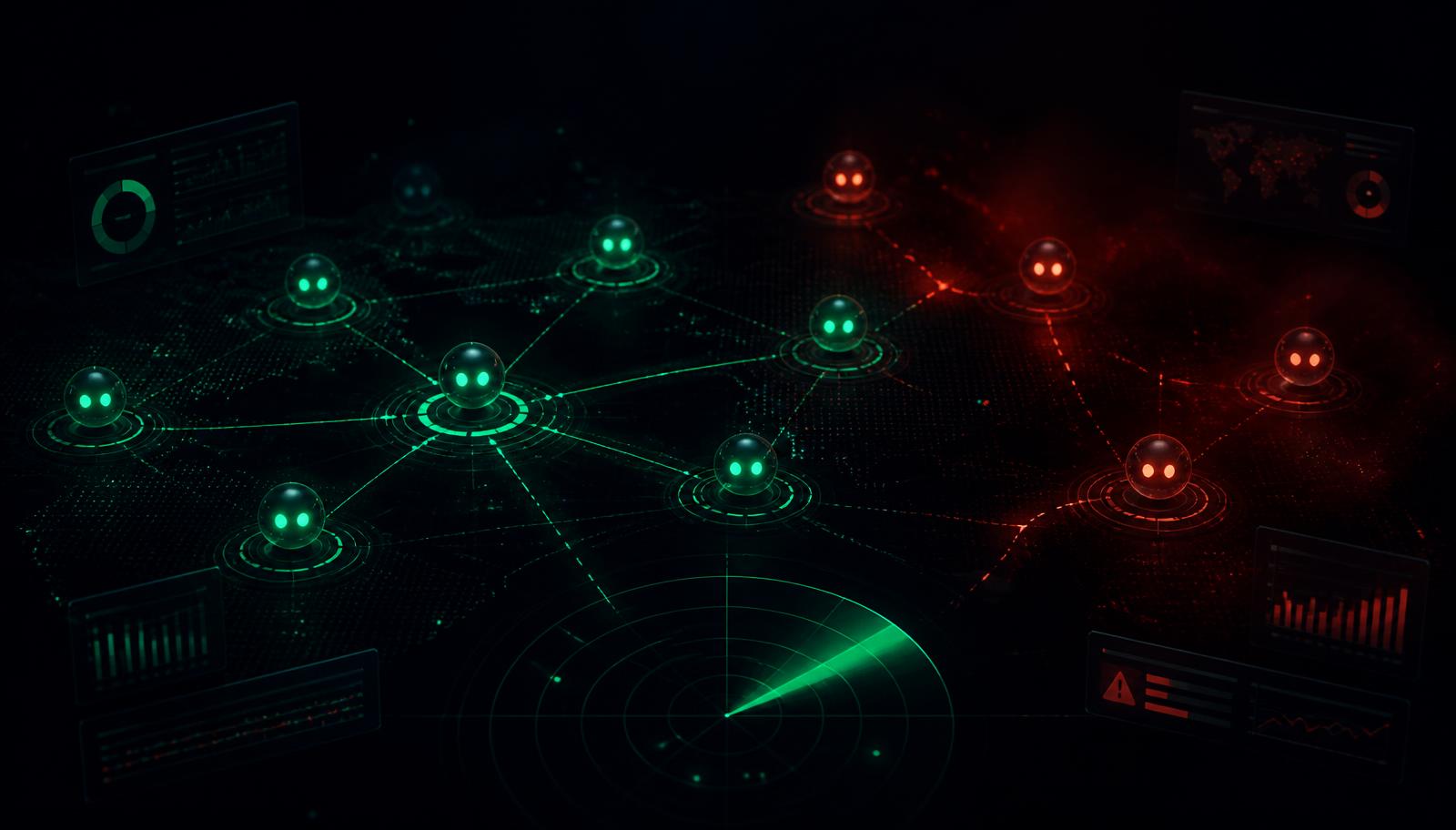
Static rules cannot anticipate every misuse pattern, so behavioral guardrails baseline normal activity per agent and per task — tool-call mix, data volumes, destinations, latency, time-of-day, error rates — and alert on statistical deviation. High-signal anomalies include an agent calling a tool it has never called before, an outbound data volume two orders of magnitude above baseline, a burst of identical actions, a call to an internal admin endpoint from a customer-facing agent, or a retrieval spike during off-hours. Feed the telemetry into your SIEM alongside human-user signals so insider misuse and compromised agents can be correlated in one pane. Every guardrail program also needs a kill switch that can pause one agent, one fleet, or the entire agent surface in under five minutes, with the pause itself logged and reversible, and rehearsed quarterly the same way you rehearse failover.
Human-in-the-loop guardrails: when to pause the agent
Not every action should be autonomous. Human-in-the-loop guardrails pause the agent and route the decision to a named approver when the action is irreversible (schema change, production deploy, data deletion), above a monetary threshold (refunds, purchases, wire transfers), touches a regulated class (PHI, financial statements, minors' data), or falls below the confidence threshold for the domain. Approval must be strongly authenticated (SSO plus MFA, ideally step-up), time-bounded (an approval expires and cannot be reused), and logged with the approver's identity, the exact payload approved, and the guardrail decisions surrounding it. Do not use Slack thumbs-ups as your control of record — auditors will not accept them, and neither should you.
Where guardrails live in the architecture
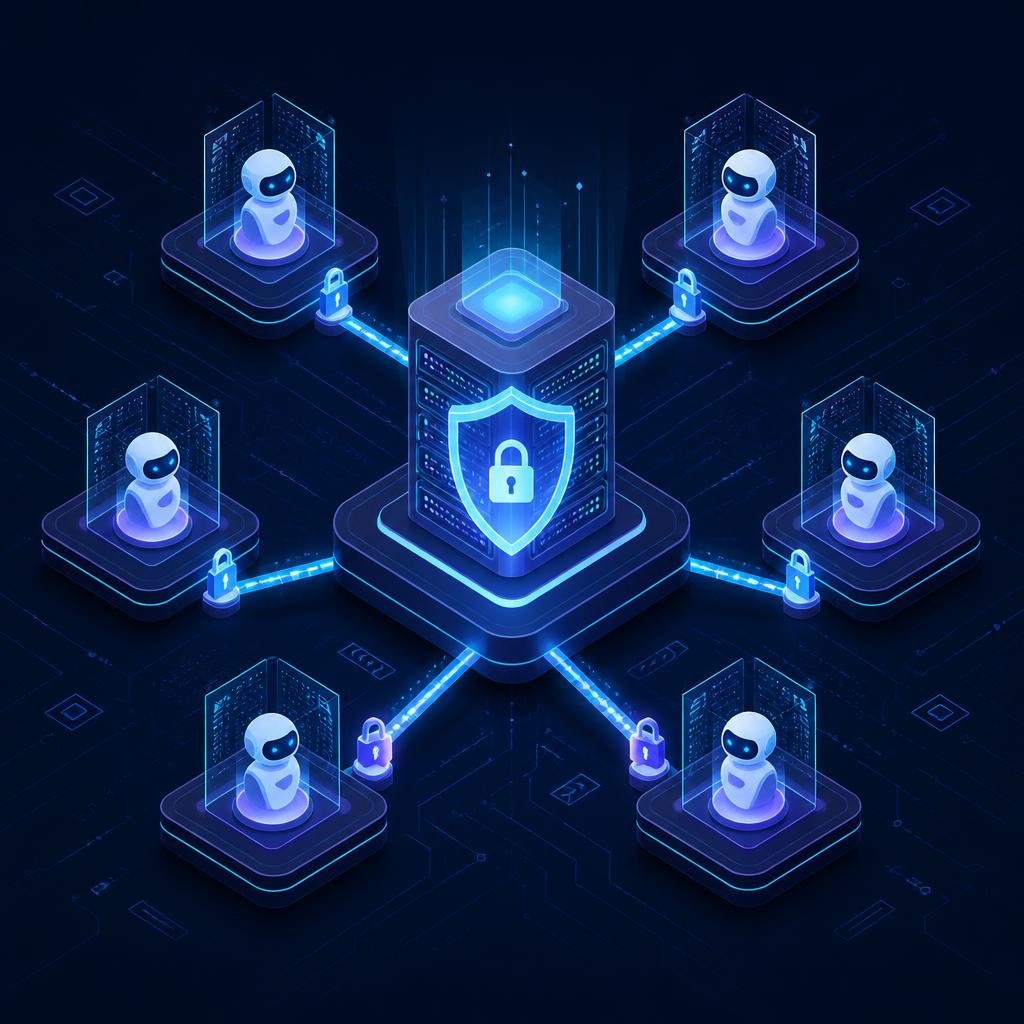
The canonical 2026 architecture places guardrails in three enforcement points. First, an ingress gateway between the user (or upstream system) and the agent runtime, running input, data, and token pre-checks. Second, a tool-call gateway between the agent and every external tool, MCP server, database, and SaaS API, running tool-call, egress, data, and cost guardrails. Third, an egress gateway between the agent and the caller (or downstream system), running output, data, and structure guardrails. All three enforcement points write to the same append-only audit log with correlated request IDs, so every allowed action can be traced end to end and every blocked action can be reviewed and tuned. Do not scatter guardrail logic across application code — a control that lives in ten places has ten places to break.
Mapping guardrails to NIST AI RMF, ISO 42001, SOC 2, and the EU AI Act
Guardrails are how a paper policy becomes an auditable control. NIST AI RMF (and the GenAI profile in NIST AI 600-1) maps guardrails to the Manage function — measurement, mitigation, and continuous monitoring of identified risks. ISO/IEC 42001 requires documented operational controls for AI systems and evidence of their effectiveness, which the guardrail log provides. SOC 2 Trust Services Criteria cover guardrails under CC6 (Logical Access), CC7 (System Operations), CC8 (Change Management), and CC9 (Risk Mitigation). GDPR Articles 5, 25, 32, and 35 map to data guardrails and DPIA evidence. HIPAA §164.312 maps to redaction, access control, and audit controls. The EU AI Act's high-risk obligations (Articles 9–15) and GPAI transparency duties (Articles 53–55) require risk management, data governance, logging, human oversight, and cybersecurity — all of which the seven-category guardrail program satisfies when implemented and evidenced correctly.
The eight anti-patterns that fail in production
One: system-prompt-only guardrails ('never share PII'). Two: guardrails implemented only in the client SDK where any misbehaving service can bypass them. Three: token limits set only at the model provider, with no per-user or per-day cap in your own runtime. Four: tool allow-lists that grant one broad tool ('run this SQL') instead of many narrow ones ('get_customer_by_id'). Five: PII detection on the completion path only, leaking sensitive data outbound to the provider on every request. Six: human-in-the-loop approvals over Slack with no cryptographic record. Seven: audit logs that store only the final answer, not the prompt, retrieved context, tool calls, and guardrail decisions. Eight: one guardrail policy for every agent — high-risk and low-risk agents must have different budgets, allow-lists, and approval thresholds, or the program is either too loose for the risky agents or too strict to ship the safe ones.
A 60-day plan to stand up AI agent guardrails
Days 1–15: inventory every agent in the environment, classify by risk tier (data sensitivity, action reversibility, blast radius), and pick two high-risk agents for the pilot. Route their traffic through an ingress and tool-call gateway. Turn on token and cost caps per request and per day. Enable PII and secrets redaction on both directions. Days 16–30: add tool-call allow-lists scoped per task, egress allow-lists on destinations, and rate/spend budgets per agent per day. Turn on output structure validation and grounded-attribution checks for consequential claims. Enable immutable audit logging with prompt, model version, policy version, tool calls, and guardrail decisions. Days 31–45: add behavioral baselining and anomaly alerts to your SIEM. Define human-in-the-loop thresholds per agent tier and wire them to an authenticated approval workflow. Rehearse the kill switch. Days 46–60: expand from the pilot agents to the full fleet, map controls and evidence to NIST AI RMF, ISO/IEC 42001, SOC 2, HIPAA, GDPR, and the EU AI Act, and run a red-team exercise focused on token abuse, indirect prompt injection, and confused-deputy tool calls.
How Watch Tower Agents implements guardrails
Watch Tower Agents is a runtime governance platform for AI agents built around the seven-category guardrail model. Ingress, tool-call, and egress gateways enforce input, token, tool-call, data, output, behavioral, and human-in-the-loop guardrails on every request, without changes to application code. Token and cost budgets are enforced per request, per session, per agent, per user, and per day, with graceful degradation to cheaper models before hard limits are hit. Tool-call allow-lists are scoped per session with parameter validation, egress controls, rate limits, and spend caps. PII, PHI, PCI, and secret redaction runs on both the prompt and completion paths. Output validation covers structure, grounded attribution, and policy classes. Behavioral baselines detect novel tool calls, volume spikes, and off-hours activity. Every guardrail decision is written to an immutable audit log with prompt, model version, policy version, and outcome, and evidence is collected continuously against NIST AI RMF, ISO/IEC 42001, SOC 2, HIPAA, GDPR, and the EU AI Act. A sub-five-minute kill switch quarantines one agent, one fleet, or the full surface. Instead of stitching guardrails together across a half-dozen libraries, security and platform teams get one system designed for how agents actually fail.
Frequently asked questions
What are AI agent guardrails?
AI agent guardrails are runtime controls placed around an agent's inputs, reasoning, tool calls, and outputs to keep behavior inside a defined policy envelope. They cover input filtering, token and cost caps, tool-call allow-lists, PII and secret redaction, output validation, behavioral anomaly detection, and human-in-the-loop approvals. Unlike system-prompt instructions, guardrails are independent enforcement points that deterministically allow, block, redact, or escalate every action — which is what auditors, regulators, and incident-response teams credit as a real control.
Why are token guardrails important for AI agents?
Without token and cost guardrails, a single non-converging planning loop can consume a month of LLM budget in an afternoon, and a single misrouted retrieval can push a multi-tenant SaaS over its provider rate limit and cause an outage for every customer at once. Effective token guardrails cap max tokens per request, per session, per agent, per user, and per day, apply cost-weighted budgets across model tiers, and degrade gracefully to cheaper models or terminate the task before hard limits are hit. They are enforced at the gateway, not in application code, so no path around them exists.
What is the difference between a guardrail and a system prompt?
A system prompt is an instruction to the model that the model may or may not follow, especially under prompt injection. A guardrail is an independent enforcement point — in a gateway, middleware, or policy engine — that inspects every request and response and deterministically allows, blocks, redacts, rewrites, or escalates the action. Guardrails are what regulators and auditors credit as controls; system-prompt instructions on their own are not.
How do I stop prompt injection with guardrails?
Prompt-injection defense requires layered controls. Input guardrails classify and quarantine suspicious content before it reaches the planner. Retrieved content is tagged with provenance and can never elevate to system-prompt scope. Tool-call guardrails allow-list the specific tools and parameters each task needs, so a foothold has no path to a dangerous action. Output guardrails validate structure and check consequential claims against grounded sources. Human-in-the-loop gates catch anything irreversible. Assume prompt injection will occasionally succeed and design so the blast radius is bounded when it does.
Do open-source guardrail libraries like NeMo Guardrails or Guardrails AI cover what I need?
They provide useful primitives — content classifiers, structured-output validators, topic detectors — but they do not replace an enterprise guardrail program. Vendor defaults are calibrated for the median customer, not your regulatory environment or risk appetite. You still need to design the policy set, integrate enforcement at ingress, tool-call, and egress gateways, connect the guardrail log to an immutable audit trail, map controls to NIST AI RMF, ISO/IEC 42001, SOC 2, HIPAA, GDPR, and the EU AI Act, and operate the kill switch and human-in-the-loop workflows. The libraries are components; the program is the control.
How do AI agent guardrails map to SOC 2, HIPAA, GDPR, and the EU AI Act?
Guardrails map to SOC 2 CC6 (Logical Access), CC7 (System Operations), CC8 (Change Management), and CC9 (Risk Mitigation); HIPAA §164.312 (access control, audit controls, integrity); GDPR Articles 5, 25, 32, and 35 (data minimization, protection by design, security of processing, DPIA); NIST AI RMF Manage function and the GenAI profile in NIST AI 600-1; ISO/IEC 42001 operational-control requirements; and the EU AI Act's high-risk obligations (Articles 9–15) and GPAI transparency duties (Articles 53–55). Map controls once and collect evidence continuously from the runtime guardrail log.
How does Watch Tower Agents implement AI agent guardrails?
Watch Tower Agents runs ingress, tool-call, and egress gateways that enforce the full seven-category guardrail set — input, token and cost, tool-call, data, output, behavioral, and human-in-the-loop — on every request, without changes to application code. Every guardrail decision is written to an immutable audit log, evidence is collected continuously against NIST AI RMF, ISO/IEC 42001, SOC 2, HIPAA, GDPR, and the EU AI Act, and a sub-five-minute kill switch quarantines one agent, one fleet, or the full agent surface.
Govern your agents before they ship
See WatchTower running on your stack in a 30-minute walkthrough.
Keep reading