Risks of Agentic AI: The Complete 2026 Guide for Enterprise Security and Compliance Leaders
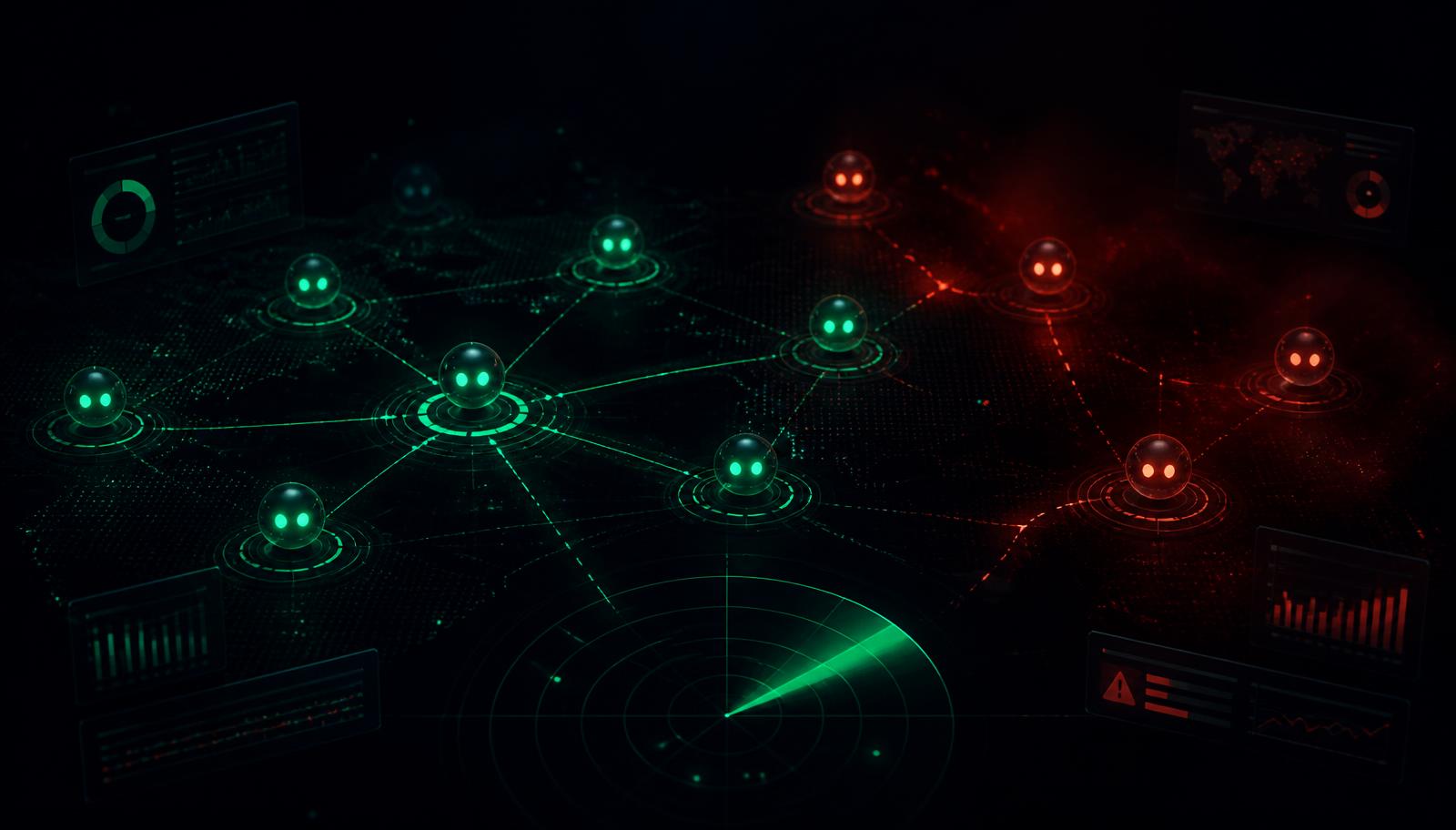
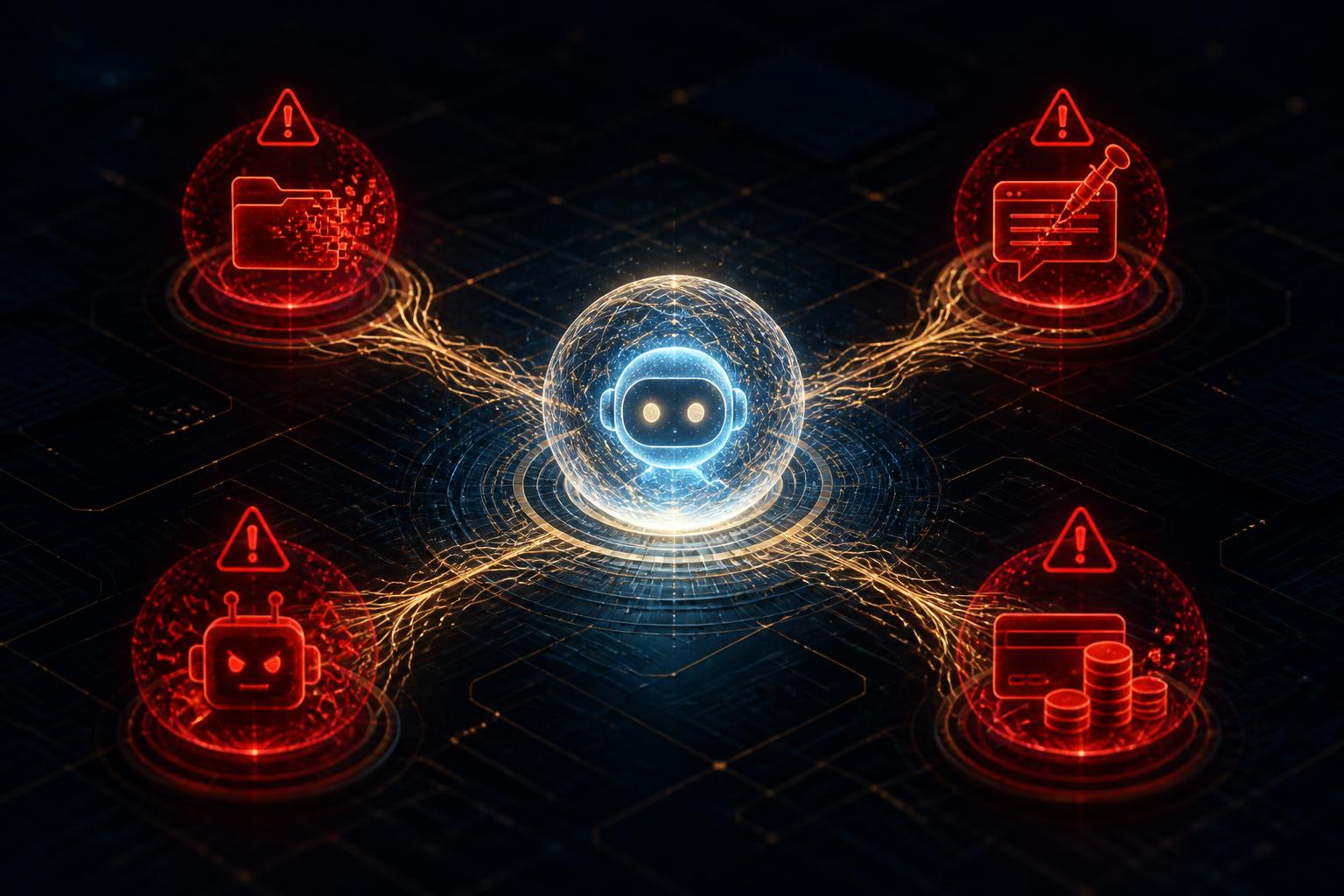
Agentic AI introduces a new class of enterprise risk: autonomous systems that plan, decide, and act across your tools at machine speed. This guide breaks down the top risks of agentic AI in 2026 — prompt injection, runaway agent loops, data exfiltration, unauthorized transactions, identity sprawl, supply-chain compromise, and regulatory exposure — and the concrete controls security, compliance, and platform teams need to mitigate each one.
Agentic AI has crossed the threshold from interesting demo to load-bearing infrastructure. Inside most large enterprises in 2026, autonomous agents are already drafting and sending customer emails, reconciling invoices, opening pull requests, approving refunds, executing trades, querying production databases, and chaining together dozens of SaaS tools to complete multi-step business processes without a human in the loop. That capability is genuinely transformative — and it introduces a class of risk that traditional security, compliance, and governance programs were not designed to handle.
This guide covers the real risks of agentic AI as they show up in production environments in 2026: what each risk looks like, why classical controls miss it, the regulatory and contractual exposure attached to it, and the concrete mitigations security, platform, and compliance teams are putting in place. It is written for the people who have to defend agentic systems — CISOs, heads of platform engineering, AI governance leads, and compliance officers — and for the executives signing off on the budget.
What is agentic AI, and what makes it risky?
Agentic AI refers to systems built around large language models that can plan multi-step tasks, choose and invoke tools, call other agents, retrieve data on demand, and execute actions in external systems with minimal human oversight. Unlike a chatbot that returns a string, an agent returns an outcome — a sent email, a created Jira ticket, a posted payment, a deployed container. The risk profile flips with that single change. Where a chatbot's worst-case failure is a wrong answer a human can ignore, an agent's worst-case failure is a wrong action a downstream system has already accepted. The combination of non-deterministic decision-making, broad tool permissions, machine-speed execution, and chained sub-agents is what makes agentic AI a distinct risk category rather than just another application of LLMs.
Why traditional security controls miss agentic risk
Classical security stacks assume three things that agentic AI breaks. First, that software is deterministic — the same input produces the same output, so you can write rules and signatures. Agents are non-deterministic; the same prompt can produce different tool calls on different runs. Second, that identity belongs to a human at a keyboard with an MFA prompt. Agents are non-human identities (NHIs) acting on behalf of many humans across many systems, often with shared service accounts and long-lived API keys. Third, that data exfiltration looks like a bulk transfer at the network edge. Agent exfiltration looks like normal API traffic — a CRM read here, a Slack message there — spread across legitimate tool calls, often initiated by a poisoned instruction the agent received from untrusted content. AppSec scanners, IAM systems, DLP, and SIEM all see pieces of the problem but none of them see the agent's intent, plan, or chain of tool calls. That is the gap.
Risk 1: Prompt injection and indirect prompt injection
Prompt injection is the single most reliable way to make an agent do something it should not. Direct prompt injection happens when a user explicitly tells the agent to ignore its system prompt; indirect prompt injection — the more dangerous variant — happens when an agent ingests untrusted content (an email, a webpage, a PDF, a calendar invite, a customer support ticket) that contains hidden instructions the model treats as authoritative. In 2026 the typical attack chain is: attacker plants instructions in a document the agent will summarize, the agent reads the document, the embedded instructions tell it to exfiltrate data via a tool call it already has permission to use, and the action goes through because every individual API call looks legitimate. OWASP lists prompt injection as the #1 risk in its LLM Top 10 for a reason. Mitigations: separate instruction and data channels at the tool-call layer, strip or quarantine untrusted content before it reaches the planner, enforce per-tool allow-lists scoped to the task, require human approval for high-impact actions, and log every retrieved document with provenance so you can reconstruct what the agent actually saw.
Risk 2: Runaway agent loops and unbounded autonomy
Agents plan, act, observe, and replan. When the observation step fails — a tool returns an error, a retrieval is empty, a sub-agent disagrees — the agent often retries, escalates, or expands its plan. Without explicit budgets, this turns into a runaway loop: thousands of API calls, runaway cloud spend, rate-limit storms that take down dependent systems, or in the worst case, repeated state changes that compound damage. The 2026 failure pattern is an agent that, told to 'resolve all open tickets,' interprets resolution liberally and closes hundreds of legitimate customer issues. Mitigations: hard step budgets and wall-clock budgets per task, cost ceilings per agent per day, circuit breakers on tool error rates, mandatory human checkpoints for irreversible actions, and a kill switch that can stop every agent in the environment in under five minutes.
Risk 3: Data exfiltration through legitimate tool calls
Agents need data to be useful, so they get broad read access — to CRMs, data warehouses, code repos, ticketing systems, and document stores. That same access becomes the exfiltration path when an agent is compromised by prompt injection or instructed by a malicious insider. The exfiltration does not look like a breach: it looks like the agent doing its job. A poisoned support ticket asks the agent to 'summarize all open accounts for context' and send the summary to an attacker-controlled email through the agent's existing send-email tool. Mitigations: scope agent data access to the minimum needed per task (not per agent), enforce egress controls on agent tool calls (allow-list destinations, block free-text outbound to external addresses), tag sensitive data so the agent's own guardrails refuse to send it, and baseline normal data volumes per agent so anomalies trigger alerts.
Risk 4: Unauthorized financial transactions and agentic commerce fraud
Agents now spend money. They book travel, renew subscriptions, top up cloud credits, pay vendors, and increasingly check out on consumer commerce sites. The risk is twofold: an agent acting on a compromised instruction moves real money, and a fraudulent agent impersonates a legitimate one at the merchant edge. Visa's Trusted Agent Protocol, Mastercard's Agent Pay, and IETF HTTP Message Signatures are emerging to address the merchant-side problem, but the enterprise-side problem is yours. Mitigations: require signed user-delegation tokens with scope (merchant, category, max amount, expiry) for every spend action, enforce dual-control above defined thresholds, route all agent payments through a single instrumented payment broker rather than letting agents hold cards directly, and reconcile agent-initiated spend daily against the delegation tokens that authorized it.
Risk 5: Identity sprawl and non-human identity (NHI) compromise
Most enterprises now have more agent identities than employees, and the gap is widening. The dominant failure mode is static, long-lived API keys shared across multiple agents, with broad scopes and no rotation. When one of those keys leaks — in a log, in a prompt, in a screenshot, in a third-party breach — the blast radius is every action every agent using that key can perform. Mitigations: per-agent identities with no sharing, short-lived scoped tokens issued per session (OAuth token exchange with on-behalf-of claims), DPoP or mTLS binding so a stolen token cannot be replayed, automated rotation and revocation under a minute, and an immutable audit log that ties every action back to a single agent identity and the human principal it acted for.
Risk 6: Supply-chain risk via MCP servers, third-party tools, and sub-agents
Agents rarely run alone. They call MCP servers, third-party APIs, plugin marketplaces, and other agents — often built and operated outside your security boundary. Each connection is a supply-chain risk: a compromised MCP server can return poisoned context that hijacks your agent's plan; a malicious plugin can read every prompt and tool call routed through it; a third-party agent can be re-pointed at an attacker-controlled model. Mitigations: maintain an inventory of every MCP server, plugin, and external agent your environment trusts, pin versions and signatures, sandbox third-party tool execution, treat all returned context as untrusted by default, and require the same compliance attestations (SOC 2, ISO/IEC 42001) from agent-stack vendors that you require from any other critical SaaS.
Risk 7: Hallucination, confabulation, and decisions on false data
Agents hallucinate, and unlike a chatbot, an agent acts on its hallucinations. A finance agent invents a vendor address and pays it. A support agent fabricates a refund policy and applies it. A legal agent cites a case that does not exist in a filing. The harm is not the false statement — it is the downstream action taken because the agent treated the false statement as ground truth. Mitigations: ground every consequential action in retrieved evidence with provenance, require citations the agent must produce before acting, validate structured outputs against schemas and authoritative sources, and route low-confidence decisions to human review rather than letting the agent commit them.
Risk 8: Insider misuse and shadow agents
Not every threat is external. Employees deploy unsanctioned agents — shadow agents — connected to corporate data through personal API keys, browser extensions, and consumer copilots. Once deployed, those agents are invisible to security, exempt from logging, and often hold standing access to regulated data. Insiders also misuse sanctioned agents, using prompt manipulation to coax actions outside policy. Mitigations: continuous discovery of agents touching corporate identities, networks, or SaaS — not a one-time audit; a fast-path approval process so sanctioned alternatives exist; behavioral baselining per agent identity to flag misuse; and a policy that ties agent actions to the human on whose behalf they ran.
Risk 9: Regulatory and contractual exposure
Agentic AI risk is now a regulated risk. The EU AI Act's high-risk obligations apply to many enterprise agent use cases (employment, credit, critical infrastructure, essential services); GPAI rules apply to the model layer beneath them. The NIST AI RMF and ISO/IEC 42001 are the operating frameworks customers and auditors expect. The SEC cyber-disclosure rules treat material AI incidents as reportable. GDPR Article 22 governs automated decisions affecting individuals; HIPAA and PCI DSS apply unchanged to agents touching their respective data. Master service agreements now include AI addenda with model-governance, human-oversight, and incident-notification clauses. Mitigations: map every agent use case to the regulatory tier it falls into, document the controls per tier, collect evidence continuously rather than annually, and flow obligations down to model and tool providers in contract.
Risk 10: Operational and reputational risk from agent failures at scale
The most under-discussed risk is the one that hits first: an agent ships a confident wrong answer to ten thousand customers in an hour, or chains a small mistake into a large outage because it can write to production. Recovery costs and reputational damage usually exceed the security loss. Mitigations: canary deployments for agent prompt and model changes, percentage rollouts, real-time output monitoring with drift detection, and rehearsed incident-response runbooks specifically for AI failures (hallucination at scale, runaway loop, prompt-injection breach, data leakage).
The control set that actually works in 2026
Across all ten risks, the same control primitives keep showing up. A unified inventory of every agent in the environment, sanctioned and shadow, with owner, purpose, data scope, and tool permissions. Per-session, short-lived, scoped credentials for every agent identity, with automated rotation and sub-minute revocation. Tool-call gateways that enforce allow-lists, egress controls, rate limits, and budgets per agent and per task. Full prompt, retrieval, and tool-call logging with model and prompt versioning, written to an immutable store. Behavioral baselining per agent and per task so anomalies are visible in minutes, not weeks. Human-in-the-loop checkpoints for irreversible or high-impact actions, with the threshold tuned per use case. A kill switch that can pause one agent, one fleet, or every agent in the environment in under five minutes. And a continuous-compliance layer that maps controls and evidence to the frameworks (EU AI Act, NIST AI RMF, ISO/IEC 42001, SOC 2, HIPAA, GDPR, PCI DSS) you have to defend against.
A 90-day plan to reduce agentic AI risk
In the first 30 days, discover and inventory every agent — sanctioned and shadow — touching your environment, assign owners, and classify each by data sensitivity and action blast radius. In days 31 to 60, replace static keys with short-lived scoped credentials for the top-risk agents, route all agent tool calls through a gateway that enforces allow-lists and budgets, and stand up centralized prompt and tool-call logging. In days 61 to 90, turn on behavioral baselining, define human-in-the-loop thresholds per use case, integrate agent telemetry into your SIEM and incident-response runbooks, and run a tabletop exercise covering prompt-injection breach, runaway loop, and data exfiltration. By the end of the quarter you should be able to answer, for any agent action in the last 90 days, who initiated it, which model and prompt ran, what data it touched, which tools it called, what guardrails fired, and how it was reviewed.
How Watch Tower Agents helps
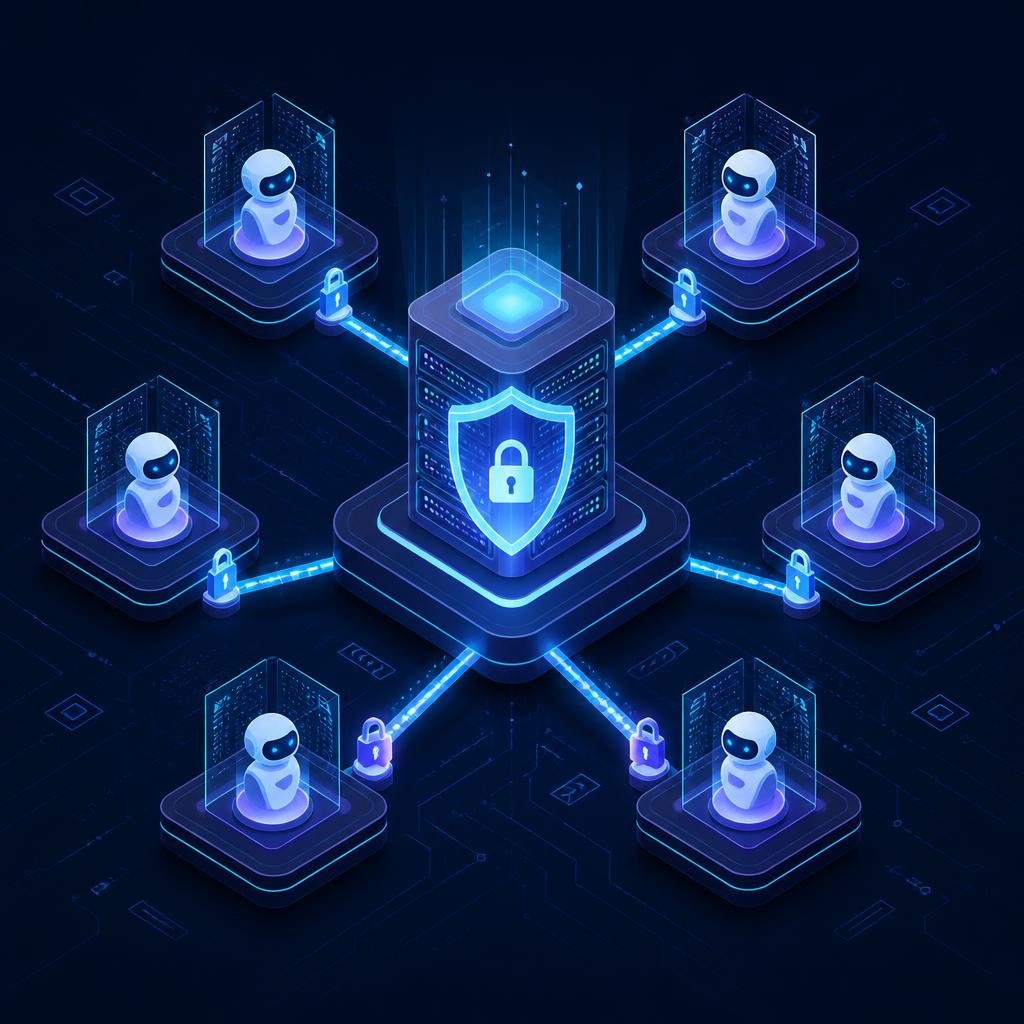
Watch Tower Agents gives enterprise security, platform, and compliance teams a single control plane for agentic AI risk: continuous discovery of sanctioned and shadow agents, non-human identity inventory with credential scope and rotation, a tool-call gateway with allow-lists and budgets, immutable per-action audit logs, behavioral baselining and anomaly detection, a sub-five-minute kill switch, and continuous-compliance evidence mapped to the EU AI Act, NIST AI RMF, ISO/IEC 42001, SOC 2, HIPAA, GDPR, and PCI DSS. Instead of stitching identity, observability, and compliance tooling together by hand, teams get one platform built specifically for the risks of agentic AI.
Frequently asked questions
What are the biggest risks of agentic AI?
The biggest risks of agentic AI in 2026 are prompt injection (especially indirect prompt injection via untrusted content), runaway agent loops, data exfiltration through legitimate tool calls, unauthorized financial transactions, identity sprawl from shared non-human identities, supply-chain compromise via MCP servers and third-party tools, hallucination-driven actions, insider misuse and shadow agents, regulatory exposure under the EU AI Act and adjacent regimes, and operational or reputational damage from agent failures at scale.
How is agentic AI risk different from generative AI risk?
Generative AI risk centers on the content a model produces — bias, hallucination, IP leakage in outputs. Agentic AI risk centers on the actions a model takes. Once an LLM can call tools, write to systems, spend money, and chain sub-agents, every wrong answer becomes a wrong action that downstream systems have already accepted. The blast radius is larger, the recovery path is harder, and traditional content-moderation controls do not apply.
Why don't traditional security tools catch agentic AI risk?
AppSec scanners assume deterministic software; IAM assumes a human at a keyboard; DLP assumes bulk data movement at the network edge. Agents are non-deterministic, act as non-human identities on behalf of many humans, and exfiltrate data through normal-looking API calls spread across legitimate tools. Each tool sees a piece of the problem, but none of them see the agent's plan, intent, or chain of tool calls — which is where agentic risk lives.
What is indirect prompt injection?
Indirect prompt injection is an attack in which an attacker plants instructions inside content an AI agent will later ingest — an email, a webpage, a PDF, a support ticket, a calendar invite — and the agent treats those instructions as authoritative. It is the most reliable way to weaponize an agent's existing tool permissions against the business and is ranked #1 in the OWASP LLM Top 10.
How do you mitigate the risks of agentic AI?
Inventory every agent, issue short-lived scoped credentials per session, route tool calls through a gateway with allow-lists and budgets, log every prompt and tool call to an immutable store, baseline behavior per agent, require human approval for high-impact actions, deploy a sub-five-minute kill switch, and map controls and evidence to the EU AI Act, NIST AI RMF, ISO/IEC 42001, SOC 2, HIPAA, GDPR, and PCI DSS.
Which regulations apply to agentic AI risk in 2026?
The EU AI Act (high-risk obligations and GPAI rules), the NIST AI Risk Management Framework, ISO/IEC 42001, SOC 2 Type II (with AI-specific Trust Services Criteria), HIPAA for protected health information, GDPR (especially Article 22 on automated decisions), PCI DSS for cardholder data, the SEC cyber-disclosure rules, DORA for EU financial entities, and state laws such as Colorado SB 205.
What is a kill switch for AI agents and why does it matter?
A kill switch is a control that lets security teams pause one agent, an agent fleet, or every agent in the environment in under five minutes. It matters because agentic failures — runaway loops, prompt-injection breaches, mass hallucinations — compound at machine speed, and rotating individual credentials or filing tickets with model providers is far too slow to contain the damage.
Govern your agents before they ship
See WatchTower running on your stack in a 30-minute walkthrough.
Keep reading