AI Governance Tools: The 2026 Buyer's Guide for Enterprise, Government, and Critical Infrastructure
A definitive 2026 guide to AI governance tools — what they do, the capabilities that actually matter (AI asset inventory, policy-as-code, runtime enforcement, audit evidence), how to evaluate vendors against NIST AI RMF, ISO/IEC 42001, and the EU AI Act, and a scorecard for choosing the right platform.
By the end of 2026, most Fortune 500 organizations will run autonomous AI agents in production — writing code, moving money, updating customer records, and orchestrating supply chains. The governance question is no longer whether to buy an AI governance tool, but which capabilities separate a real control plane from a compliance checkbox. This guide is the working reference our team uses when advising enterprise, government, and critical-infrastructure buyers on AI governance tooling in 2026.
What AI governance tools actually do
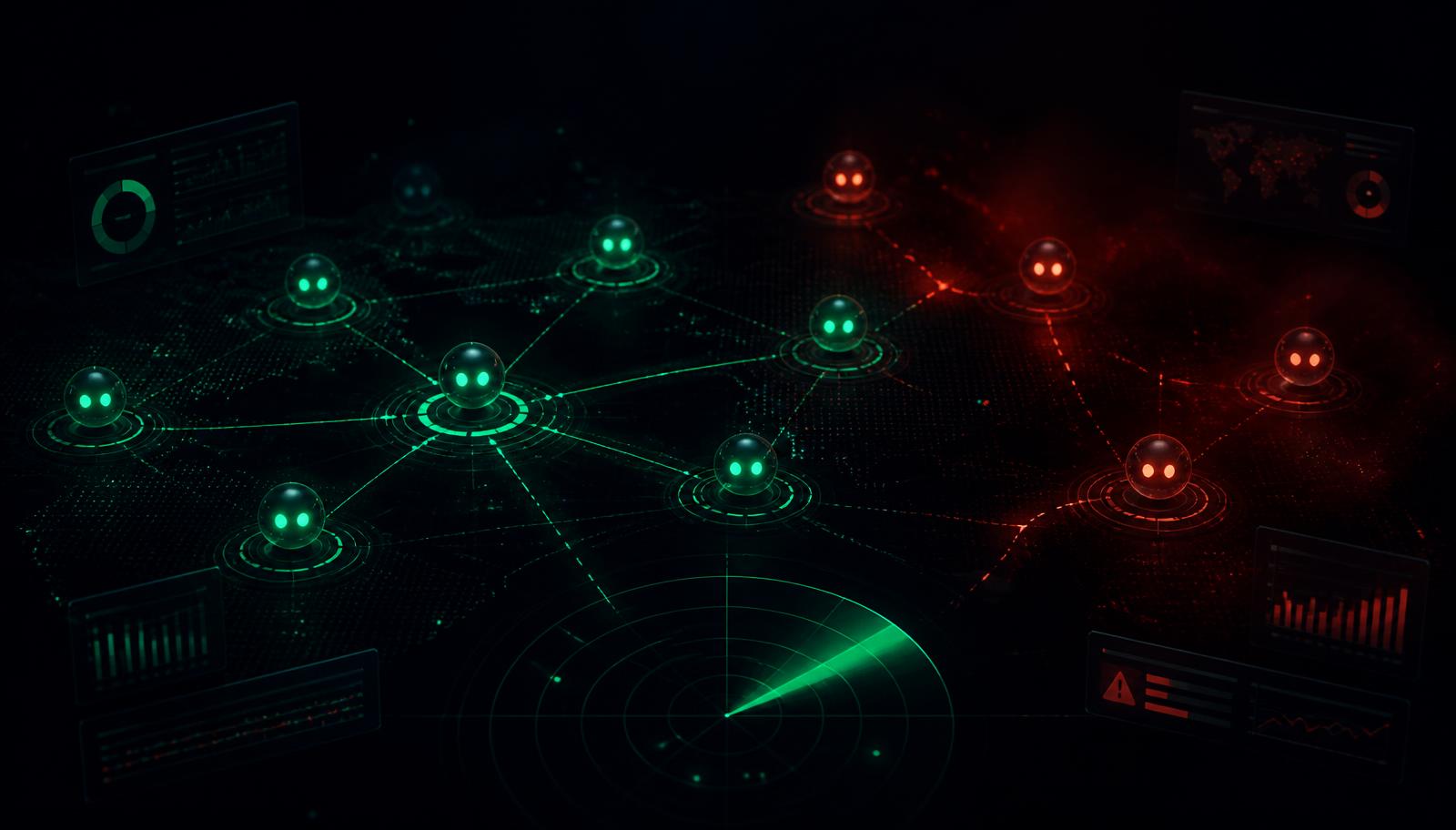
An AI governance tool is the control plane that sits between your organization and every AI model, copilot, and autonomous agent it operates. Where a SIEM records network events and a GRC platform tracks policies on paper, an AI governance tool observes model and agent behavior in real time, enforces the policies your risk committee approved, and produces the evidence auditors and regulators now demand under NIST AI RMF, ISO/IEC 42001, and the EU AI Act. In practical terms it answers four questions continuously: what AI is running in our environment, what is it doing right now, is that action allowed, and can we prove it after the fact.
The five capabilities that actually matter in 2026
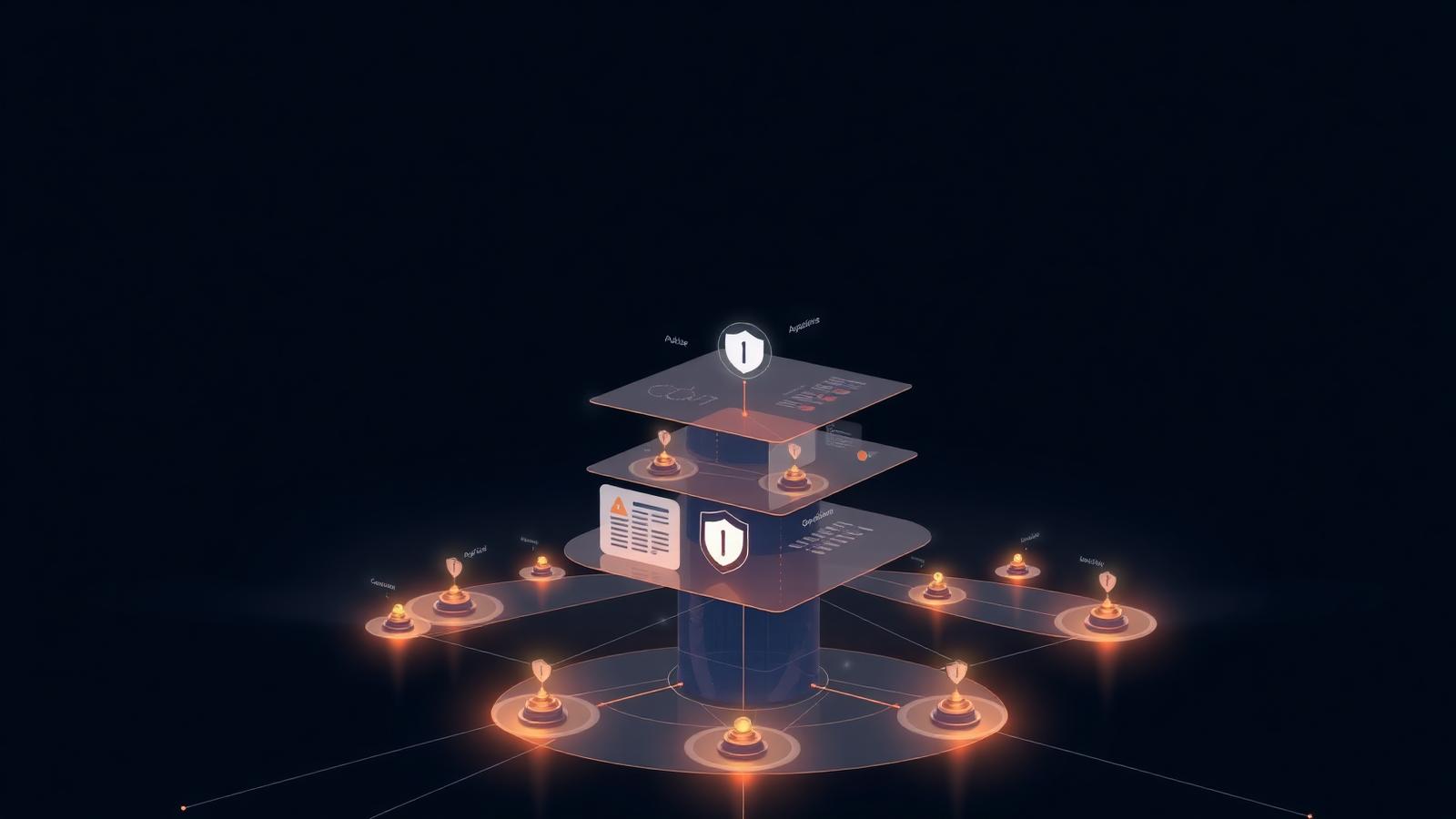
Vendor marketing pages list dozens of features. In real enterprise deployments, five capabilities carry the entire program. First, AI asset inventory — automatic discovery of every model endpoint, agent, MCP server, embedding store, and shadow-AI tool employees use, with ownership, data sensitivity, and business context attached. Second, policy-as-code — human-readable rules (who can call which tools, what data classes may leave the environment, what actions require human approval) that are versioned, reviewable, and executed against every request. Third, real-time runtime enforcement — the ability to block, redact, throttle, or kill an in-flight agent action before it executes, not after the fact. Fourth, continuous risk and compliance mapping — every control automatically mapped to NIST AI RMF, ISO/IEC 42001, OWASP LLM Top 10, SOC 2, HIPAA, GDPR, and the EU AI Act, with drift alerts. Fifth, immutable audit logging — a tamper-evident record of every prompt, tool call, output, and policy decision, retained long enough to satisfy the longest applicable regulatory clock.
Why legacy tools cannot govern AI
Buyers frequently ask whether existing SIEM, DLP, CASB, EDR, or GRC investments already cover AI. They do not. A SIEM sees TLS-encrypted API calls to an LLM provider; it cannot see the prompt, the tool call, or the fact that the agent just approved a $40,000 wire. A DLP watches file movements; it cannot detect that a model summarized regulated PHI into an outbound Slack message. A CASB governs SaaS logins; it cannot govern an autonomous agent acting under a service account across ten SaaS tools. A GRC platform stores your AI policy as a PDF; it does not execute that policy against a live tool call. AI governance tools exist because the primitives to observe and control are new: prompts, tool calls, model outputs, agent intents, and non-human identities.
AI asset inventory: the foundation every program needs
You cannot govern what you cannot see. A credible AI asset inventory continuously discovers first-party models, third-party APIs (OpenAI, Anthropic, Google, Azure OpenAI, Bedrock), open-source models running on internal GPUs, MCP servers, embedding databases, vector stores, retrieval pipelines, and every agent — sanctioned or shadow — calling them. Each asset should carry an owner, a data-sensitivity classification, the business processes it touches, and a live risk score. In 2026, discovery must include agent-to-agent traffic and MCP tool catalogs, because that is where most enterprise AI action now happens.
Policy-as-code: turning risk decisions into executable controls
The bridge from a written AI policy to an enforced one is policy-as-code. A modern AI governance tool lets a security engineer, risk officer, or compliance lead express rules in a reviewable format — for example, agents in the finance domain may not call external tools that transmit customer PII, or any agent action with an estimated blast radius above a threshold requires two-person approval. Those rules are versioned in Git, reviewed like application code, tested against replayed traffic, and enforced at runtime. This is how you get from an EU AI Act obligation on paper to a control that actually stops the wrong action in production.
Runtime enforcement: the feature that separates theater from control
Detection without enforcement is expensive telemetry. Runtime enforcement is what turns an AI governance tool from a report generator into an operational control. In practice that means an inline decision point on every tool call and every model output: block a wire transfer initiated by a compromised agent, redact PHI before it flows to a third-party model, require human approval for irreversible actions, kill a runaway agent with one click, and quarantine an entire agent identity when its behavior drifts. Enterprises evaluating tools should ask vendors to demonstrate blocking a live action, not merely alerting on it after execution.
Compliance mapping: NIST AI RMF, ISO/IEC 42001, EU AI Act, SOC 2, HIPAA, GDPR
Every enterprise AI program in 2026 is measured against at least three frameworks simultaneously. NIST AI RMF defines the governance, map, measure, and manage functions U.S. federal and defense buyers expect. ISO/IEC 42001 is the emerging international AI management-system standard that European and multinational customers now request in RFPs. The EU AI Act imposes prohibited-use, high-risk, and general-purpose model obligations with material fines. SOC 2, HIPAA, and GDPR remain non-negotiable for regulated industries. A serious AI governance tool ships with these frameworks pre-mapped to its controls, updates the mappings as regulations evolve, and produces evidence packages auditors accept without a six-week evidence-gathering scramble.
Audit evidence: what regulators and auditors ask for in 2026
The pattern in every recent AI audit is the same. Regulators and auditors ask: show me every AI system in scope, show me who owns it, show me the policy that governs it, show me every action it took during the audit window, and show me the decisions your control plane made about those actions. AI governance tools that survive this examination produce immutable logs with cryptographic integrity, per-agent activity histories, policy-decision records with reason strings, and exportable evidence packages tied to each control in the applicable frameworks. Anything less turns audits into fire drills.
How to evaluate AI governance tools: a practical scorecard
Evaluate every candidate on the same eight dimensions and score honestly. Coverage — does it discover models, agents, MCP servers, and shadow AI, or only one category. Depth — does it capture prompts, tool calls, and outputs, or only metadata. Enforcement — can it block in real time, or only alert. Policy — can risk and compliance teams author rules without engineering, and are those rules versioned. Compliance — how many frameworks are pre-mapped, and how quickly are new regulations added. Integrations — does it fit your existing IdP, SIEM, ticketing, and data-warehouse stack. Deployment — SaaS, self-hosted, VPC, or air-gapped for defense and critical-infrastructure buyers. Total cost — including the human hours saved on audits, incident response, and evidence gathering.
Deployment models: SaaS, VPC, and air-gapped
Enterprise buyers typically default to SaaS. Government, defense, financial-services, and critical-infrastructure buyers frequently require a customer-controlled deployment: a dedicated VPC, on-premises install, or a fully air-gapped environment with no external egress. When evaluating tools, verify that the same capabilities — inventory, policy, enforcement, audit — run identically in the deployment model your data-residency and sovereignty requirements demand, and that upgrades do not require internet access.
Where Watch Tower Agents fits
Watch Tower Agents is built for the profile this guide describes: enterprises, government agencies, defense programs, and critical-infrastructure operators that need real-time governance and runtime security over autonomous AI, not another dashboard. The platform delivers continuous AI asset inventory, policy-as-code with reviewable version control, inline runtime enforcement on every tool call and model output, an immutable audit log with cryptographic integrity, and pre-mapped controls for NIST AI RMF, ISO/IEC 42001, OWASP LLM Top 10, SOC 2, HIPAA, GDPR, and the EU AI Act. It deploys as SaaS, VPC, or air-gapped, and integrates with the identity, SIEM, and ticketing stack your team already runs.
The 30-day path to a governed AI environment
The organizations doing this well move in four steps over roughly 30 days. Week one: connect the AI governance tool to identity, cloud, SIEM, and every model provider; let discovery run and generate the first inventory. Week two: import your written AI policy and translate the top ten rules into policy-as-code; run them in observe mode against live traffic. Week three: flip enforcement to blocking on the highest-risk actions (data exfiltration to external models, irreversible tool calls, unapproved agents); tune false positives. Week four: generate the first evidence package for your framework of record (NIST AI RMF or ISO/IEC 42001), review with internal audit, and schedule the recurring cadence. From there, governance becomes an operational routine rather than a quarterly emergency.
Frequently asked questions
What are AI governance tools?
AI governance tools are enterprise platforms that discover, monitor, and control every AI model and autonomous agent in an organization. They combine AI asset inventory, policy-as-code, real-time runtime enforcement on tool calls and model outputs, and immutable audit logging mapped to frameworks like NIST AI RMF, ISO/IEC 42001, the EU AI Act, SOC 2, HIPAA, and GDPR.
How are AI governance tools different from GRC or SIEM platforms?
GRC platforms store policies as documents and workflows; SIEMs record network and log events. Neither can see the prompts, tool calls, or outputs that make up autonomous AI behavior. AI governance tools operate on those AI-native primitives, which is why they can enforce policy against a live agent action while a GRC or SIEM can only report on it afterward.
Do I still need an AI governance tool if I only use OpenAI or Microsoft Copilot?
Yes. Vendor consoles show usage of that one provider. They do not inventory shadow AI, they do not govern agent-to-agent behavior across MCP servers and internal tools, and they do not produce the cross-framework evidence auditors expect. A governance layer sits above every provider to give one control plane for the whole enterprise.
Which compliance frameworks should an AI governance tool support?
At minimum, NIST AI RMF, ISO/IEC 42001, and the EU AI Act, plus the general-purpose standards you already carry: SOC 2, HIPAA, GDPR, and where applicable FedRAMP, CMMC, PCI DSS, and sector rules like NERC CIP for critical infrastructure. The tool should ship with pre-built mappings and update them as regulations evolve.
Can AI governance tools stop prompt injection and data exfiltration?
The ones with real runtime enforcement can. When policy-as-code is executed on every tool call and every model output, the platform can block sensitive data classes from leaving the environment, require approval for irreversible actions, and quarantine an agent whose behavior indicates a successful injection — before the harmful action completes.
How long does an AI governance tool take to deploy?
In our field experience, an enterprise can go from signature to first evidence package in about 30 days: one week of discovery and integration, one week translating written policy to policy-as-code, one week flipping enforcement on high-risk actions, and one week generating audit evidence and setting the recurring cadence.
Do AI governance tools work in air-gapped or classified environments?
The best-suited platforms do. Government, defense, and critical-infrastructure buyers should require a deployment model — VPC, on-premises, or fully air-gapped — where the same inventory, policy, enforcement, and audit capabilities operate without external egress, and where upgrades ship as signed artifacts rather than internet-dependent updates.
How does Watch Tower Agents compare to other AI governance tools?
Watch Tower Agents is purpose-built for enterprise, government, defense, and critical-infrastructure buyers who need real-time runtime security in addition to governance reporting. It combines AI asset inventory, policy-as-code, inline enforcement on tool calls and outputs, and cryptographically verifiable audit logs — all pre-mapped to NIST AI RMF, ISO/IEC 42001, the EU AI Act, SOC 2, HIPAA, and GDPR — with SaaS, VPC, and air-gapped deployment options.
Govern your agents before they ship
See WatchTower running on your stack in a 30-minute walkthrough.
Keep reading