AI Agent Management Platforms: What Enterprises Need in 2026
Enterprises now operate hundreds of autonomous AI agents across security, sales, finance, and operations. This guide breaks down what an AI agent management platform is, why it has become essential infrastructure in 2026, and what to look for when selecting one.

Artificial intelligence has entered a completely new phase in enterprise technology. Businesses are no longer experimenting with isolated AI chatbots or simple workflow automations. In 2026, enterprises are building large-scale ecosystems of autonomous AI agents capable of reasoning, collaborating, executing tasks, interacting with APIs, analyzing business data, communicating with customers, managing workflows, and making operational decisions with minimal human involvement.
This transformation is reshaping nearly every industry. From healthcare and finance to cybersecurity, logistics, legal services, insurance, manufacturing, and real estate, organizations are deploying AI agents at an unprecedented scale. Enterprises that once operated a few automation tools now manage hundreds or even thousands of AI-powered systems simultaneously.
As AI adoption accelerates, a new challenge has emerged: how do businesses securely manage, monitor, govern, coordinate, and optimize large networks of intelligent AI agents? This is where AI agent management platforms have become essential. In 2026 they are rapidly evolving into foundational enterprise infrastructure, providing centralized oversight for enterprise AI ecosystems — controlling agent behavior, permissions, workflows, communication, observability, compliance, security, and performance from a single operational layer. Without centralized management, enterprise AI environments quickly become chaotic, insecure, expensive, and difficult to scale.
What is an AI agent management platform?
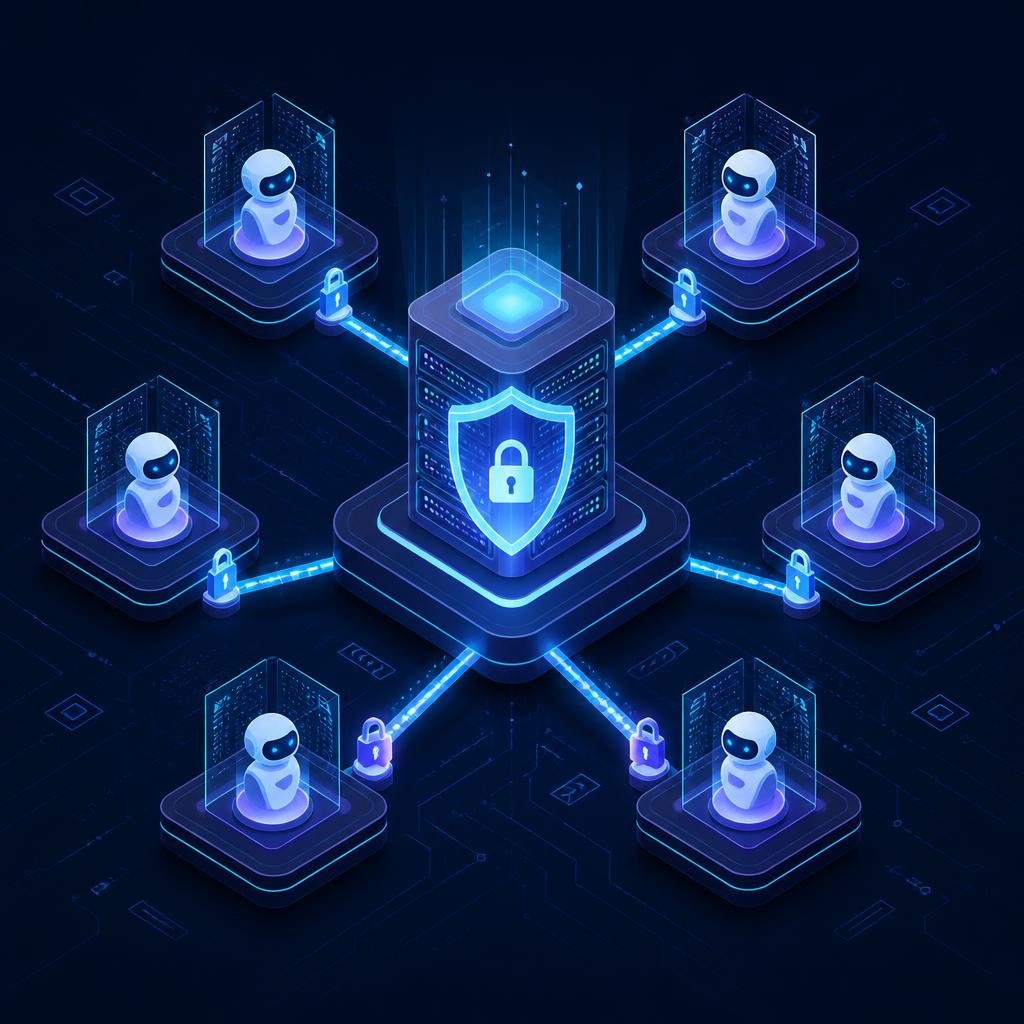
An AI agent management platform is a centralized software environment designed to deploy, orchestrate, monitor, govern, secure, and optimize AI agents across an organization. These platforms function as the operational command center for enterprise artificial intelligence systems. Rather than managing disconnected AI applications independently, enterprises use AI agent management platforms to coordinate all intelligent systems from a unified environment.
This includes autonomous AI agents, AI copilots, multi-agent systems, AI workflow automations, LLM-powered assistants, API-integrated AI services, decision-making AI systems, AI orchestration pipelines, intelligent process automation systems, internal enterprise AI tools, customer-facing AI assistants, and AI-powered operational systems. In many ways, these platforms serve a similar role to what cloud management systems did during the rise of cloud computing. As cloud infrastructure expanded, organizations needed centralized visibility, governance, and orchestration. The same shift is now happening with enterprise AI.
Why AI agent management platforms matter in 2026
The rapid expansion of enterprise AI has created a massive operational challenge. Many organizations now operate dozens or hundreds of AI-powered systems simultaneously, interacting with internal databases, CRMs, financial systems, HR platforms, cloud infrastructure, customer support tools, security monitoring systems, legal repositories, marketing platforms, communication channels, business intelligence systems, and broad API ecosystems. Without centralized management, organizations face significant risks.
The rise of AI sprawl
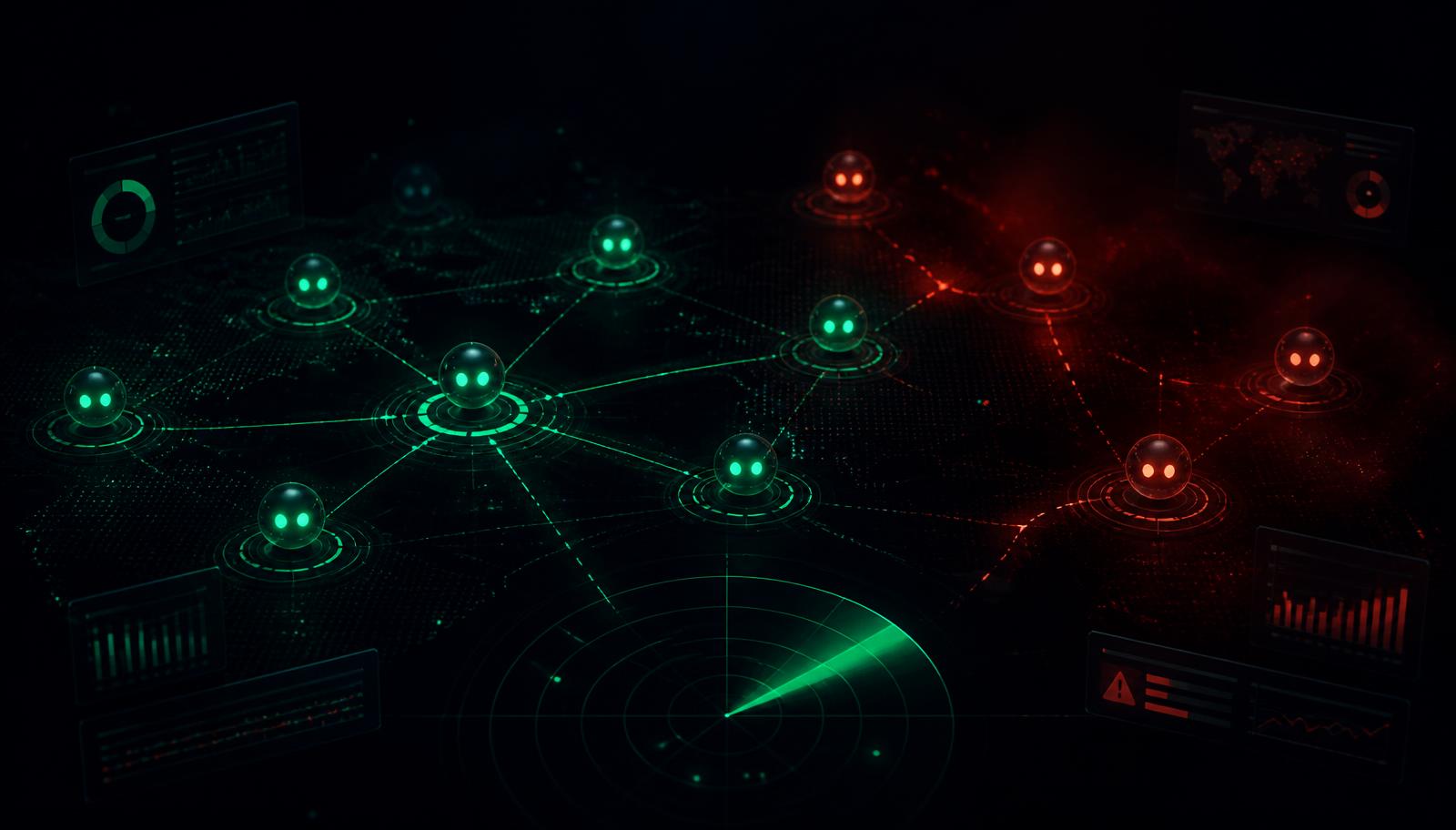
One of the biggest enterprise concerns in 2026 is AI sprawl — when departments independently deploy AI systems without centralized oversight. Marketing teams deploy AI content agents. Sales teams implement AI outreach assistants. Cybersecurity departments use AI threat analysis tools. Customer support teams launch autonomous service agents. Development teams deploy AI coding assistants. Operations teams use AI scheduling systems. Over time, organizations lose visibility into which AI agents exist, what data they can access, which APIs they connect to, what permissions they possess, how they communicate, what decisions they make, how they store information, and which workflows they influence. This creates operational fragmentation, governance gaps, and major security risks. AI agent management platforms solve this by providing centralized governance, observability, orchestration, and control.
AI is becoming autonomous
Traditional software required direct human interaction. Modern AI agents increasingly operate independently — triggering actions automatically, monitoring systems continuously, executing workflows autonomously, collaborating with other agents, analyzing business conditions in real time, escalating incidents, generating reports, communicating with customers, coordinating operational tasks, making recommendations, scheduling activities, and optimizing workflows dynamically. As AI autonomy increases, enterprises require stronger oversight frameworks. Without centralized management, autonomous systems can create operational instability.
Enterprises need AI governance
Governance has become one of the most important aspects of enterprise AI deployment. Organizations now face increasing pressure from regulators, investors, customers, cybersecurity teams, compliance departments, legal advisors, and insurance providers. Businesses must demonstrate responsible AI deployment practices: auditability, transparency, security, human oversight, risk management, compliance controls, data governance, and ethical AI usage. AI agent management platforms provide the infrastructure necessary to enforce these standards.
From AI tools to AI workforces
One of the biggest shifts in 2026 is the transition from isolated AI tools to coordinated AI workforces. Organizations are no longer deploying single-purpose assistants — they are building entire ecosystems of specialized AI agents. A modern enterprise sales operation may include AI lead qualification agents, CRM management agents, prospect research agents, outreach assistants, follow-up systems, analytics agents, scheduling coordinators, and proposal generation tools. These systems often communicate with one another automatically: a lead qualification agent passes information to a CRM agent, which triggers an outreach workflow; an analytics agent evaluates engagement data; a scheduling agent coordinates meetings; a proposal agent generates custom documents. This interconnected ecosystem behaves more like a digital workforce than a traditional software stack — and managing it requires enterprise-grade orchestration infrastructure.
Core features enterprises need
Not all AI management systems are built for enterprise deployment. In 2026, enterprises require advanced capabilities far beyond simple chatbot dashboards. Centralized orchestration lets teams deploy AI agents, monitor active systems, assign tasks, configure workflows, manage permissions, update agents, track activity, and coordinate multi-agent operations — reducing complexity and improving operational visibility.
Multi-agent coordination
Modern enterprise workflows often involve multiple AI agents working together. A cybersecurity workflow may chain threat detection, log analysis, vulnerability assessment, incident response, and reporting agents. A healthcare workflow may chain patient intake, insurance verification, scheduling, documentation, and clinical analysis agents. Platforms must support agent-to-agent communication, shared context systems, workflow synchronization, real-time collaboration, persistent memory layers, dynamic task routing, and context-aware coordination. Without orchestration, multi-agent environments become fragmented and inefficient.
AI workflow automation
AI is increasingly replacing repetitive operational workflows. Platforms now automate customer onboarding, data analysis, compliance checks, security monitoring, reporting, internal communications, lead generation, appointment scheduling, financial reviews, and documentation processing. AI agent management platforms help enterprises coordinate these automations safely and efficiently.
Enterprise security controls
Security has become one of the most important components of AI management. AI agents often possess access to sensitive systems and privileged data. Modern platforms require role-based access controls, identity management, permission segmentation, API governance, secure credential storage, session tracking, encryption, behavioral monitoring, threat detection, zero trust frameworks, and agent isolation environments. Cybersecurity teams increasingly treat AI agents as digital employees that require identity and access management controls.
AI observability
AI observability is the ability to monitor and analyze AI behavior in real time. Enterprises need visibility into agent activity, decision chains, workflow execution, error rates, hallucination risks, API usage, latency, operational efficiency, security anomalies, data access behavior, and agent communication patterns. Observability is critical for troubleshooting, optimization, governance, and compliance.
Human oversight systems
Despite increasing automation, human oversight remains essential. Many enterprises now require human approval workflows, escalation triggers, confidence thresholds, manual intervention systems, supervisor review queues, and risk-based authorization — especially in regulated industries like healthcare, finance, legal services, and insurance.
AI lifecycle management
AI agents require ongoing maintenance and optimization. Platforms increasingly support agent version control, model updates, deployment pipelines, rollback systems, performance benchmarking, resource optimization, workflow testing, and operational analytics. As AI ecosystems scale, lifecycle management becomes essential for stability.
AI security challenges in 2026
The rapid expansion of autonomous AI systems has introduced entirely new cybersecurity challenges — AI agents can become both operational assets and attack surfaces. Prompt injection attacks attempt to manipulate AI agents through malicious prompts to extract sensitive data, override instructions, bypass safeguards, trigger unauthorized actions, and manipulate workflows. Platforms now include prompt filtering, behavioral analysis, context validation, safety enforcement, and threat detection.
Credential abuse is a parallel risk. AI agents frequently access cloud platforms, internal databases, financial systems, customer records, APIs, and SaaS platforms, so poor credential management creates major vulnerabilities. Modern platforms increasingly use temporary credentials, API token rotation, least-privilege access, vault integrations, and permission segmentation. Hallucinations remain a major concern — an AI agent generating inaccurate legal advice, financial analysis, or cybersecurity recommendations could create severe consequences — so platforms include confidence scoring, verification systems, human escalation triggers, source attribution, and output validation. Finally, shadow AI (employees deploying unauthorized tools) creates hidden risks; management platforms help identify unauthorized usage, unapproved API integrations, risky workflows, and data exposure.
AI governance and compliance
Governance has become one of the defining challenges of enterprise AI adoption. Organizations must comply with GDPR, HIPAA, SOC 2, ISO 27001, PCI DSS, EU AI Act requirements, and industry-specific regulations. AI management platforms increasingly include built-in compliance frameworks: comprehensive audit logging for agent actions, workflow activity, data access, decision chains, user interactions, and permission changes. Regulators increasingly require organizations to explain AI-driven decisions, so platforms support decision tracing, source attribution, workflow visibility, and reasoning logs. Data governance — storage, access, retention, cross-border movement, and privacy controls — is enforced consistently across distributed AI systems.
Industry use cases
In cybersecurity, AI agents handle threat monitoring, vulnerability detection, log analysis, incident response, risk scoring, malware investigation, and compliance auditing. In healthcare, agents handle patient intake, scheduling, documentation, claims processing, clinical summarization, and administrative automation under strict HIPAA controls. In financial services, agents handle fraud detection, risk analysis, customer support, financial reporting, regulatory compliance, and investment research — with auditability and explainability as top priorities. In real estate, agents handle listing creation, lead qualification, client communication, market analysis, social media automation, and CRM management. In legal services, agents handle contract review, legal research, case summarization, documentation analysis, and compliance workflows, with human review remaining essential.
The rise of AI workforce analytics
One of the newest enterprise trends is AI workforce analytics. Organizations increasingly evaluate AI systems similarly to human employees, monitoring AI productivity, task completion rates, operational efficiency, error frequency, workflow success rates, customer satisfaction, cost savings, and ROI metrics. AI management platforms increasingly include dashboards for measuring AI workforce performance.
Future trends shaping AI agent management
Several trends are shaping the future of enterprise AI infrastructure. Persistent AI memory enables personalized workflows, cross-session continuity, adaptive learning, and institutional knowledge retention. Many vendors are evolving toward full AI operating systems capable of coordinating all enterprise AI activity from a unified layer. Organizations are moving toward decentralized, interconnected AI ecosystems rather than isolated tools. AI trust layers — verifiable outputs, explainable reasoning, source attribution, and behavioral auditing — are becoming increasingly important. And AI agents are increasingly managing autonomous enterprise operations across logistics, customer support, security monitoring, financial analysis, workflow automation, and internal communications.
What to look for in an AI agent management platform
Choosing the right platform has become a major strategic decision. Organizations should evaluate scalability (can the platform support enterprise-scale deployments?), security (does it include enterprise-grade controls?), compliance (can it support regulatory requirements?), multi-agent coordination (can it orchestrate complex workflows across multiple agents?), observability (does it provide real-time monitoring and analytics?), reliability (can it support mission-critical operations?), integration capabilities (can it connect with existing systems and APIs?), and governance controls (does it provide centralized policy enforcement?).
Why AI agent management platforms will become essential infrastructure
By the end of 2026, AI agents will likely become embedded across nearly every enterprise function — operations, sales, customer support, security, analytics, marketing, documentation, compliance, software development, and business intelligence. As AI ecosystems grow more autonomous, enterprises will require centralized management infrastructure similar to cloud management platforms, cybersecurity operations centers, identity management systems, and enterprise resource planning systems. AI management platforms are becoming the operational backbone of enterprise artificial intelligence.
Watch Tower Agents: enterprise AI agent management built for the future
As enterprises continue deploying increasingly autonomous AI systems, platforms like Watch Tower Agents are helping organizations manage, monitor, orchestrate, and secure AI operations at scale. Watch Tower Agents is designed to provide businesses with centralized oversight for AI agent ecosystems, helping organizations coordinate intelligent workflows across departments, teams, and operational environments. It addresses the growing challenges of AI visibility, workflow coordination, governance, agent communication, operational monitoring, security oversight, scalability, and compliance management — providing a centralized environment for managing AI agents across enterprise operations. As organizations move toward multi-agent infrastructures, platforms like Watch Tower Agents become increasingly important for AI orchestration, workflow automation, agent observability, operational intelligence, enterprise AI governance, multi-agent collaboration, real-time monitoring, and AI infrastructure management. Businesses deploying AI systems at scale need more than isolated tools — they need enterprise-grade operational infrastructure capable of supporting the future of autonomous business operations.
Final thoughts
AI agent management platforms are rapidly becoming one of the most important technology categories in enterprise infrastructure. The future of enterprise AI will not be defined solely by how intelligent individual AI agents become — it will be defined by how effectively organizations can manage entire AI ecosystems at scale. As enterprises deploy increasingly autonomous digital workforces, centralized AI governance, orchestration, observability, and security will become essential operational requirements. Organizations that invest early in AI management infrastructure will gain significant competitive advantages through greater operational efficiency, improved automation, stronger security, better compliance, enhanced scalability, faster decision-making, and reduced operational complexity. The AI economy is evolving rapidly — and businesses that establish strong AI management foundations today will be significantly better positioned for the next era of intelligent enterprise operations.
Frequently asked questions
What is an AI agent management platform?
An AI agent management platform is a centralized software environment used to deploy, orchestrate, monitor, govern, secure, and optimize AI agents across an organization. It acts as the operational command center for all enterprise AI systems — autonomous agents, copilots, multi-agent workflows, and LLM-powered services — providing unified visibility and control.
Why do enterprises need an AI agent management platform in 2026?
Most enterprises now operate dozens or hundreds of AI agents across security, sales, finance, customer support, and operations. Without a central platform, AI sprawl creates governance gaps, security risks, duplicated cost, and untracked data access. A management platform consolidates orchestration, observability, identity, and compliance into one operational layer.
What is AI sprawl and why is it a risk?
AI sprawl is the unmanaged proliferation of AI tools and agents deployed independently by different teams. It causes loss of visibility into which agents exist, what data they touch, what APIs they call, and what decisions they make — which leads to compliance violations, security incidents, and runaway cost.
What core features should an enterprise AI agent management platform include?
At minimum: centralized orchestration, multi-agent coordination, workflow automation, role-based access and identity controls, observability with full audit logging, human-in-the-loop oversight, lifecycle management, and built-in governance for frameworks such as GDPR, HIPAA, SOC 2, ISO 27001, and the EU AI Act.
How does an AI agent management platform improve security?
It treats every AI agent as a managed identity with scoped permissions, rotates credentials, enforces least-privilege access, monitors agent behavior for anomalies, blocks risky tool calls before execution, and provides forensic audit trails — closing the gaps that prompt injection, credential abuse, and shadow AI typically exploit.
How is Watch Tower Agents different?
Watch Tower Agents is purpose-built for enterprise AI operations at scale, combining orchestration, observability, governance, and security in a single platform so organizations can coordinate large multi-agent ecosystems without losing visibility or control.
Govern your agents before they ship
See WatchTower running on your stack in a 30-minute walkthrough.
Keep reading