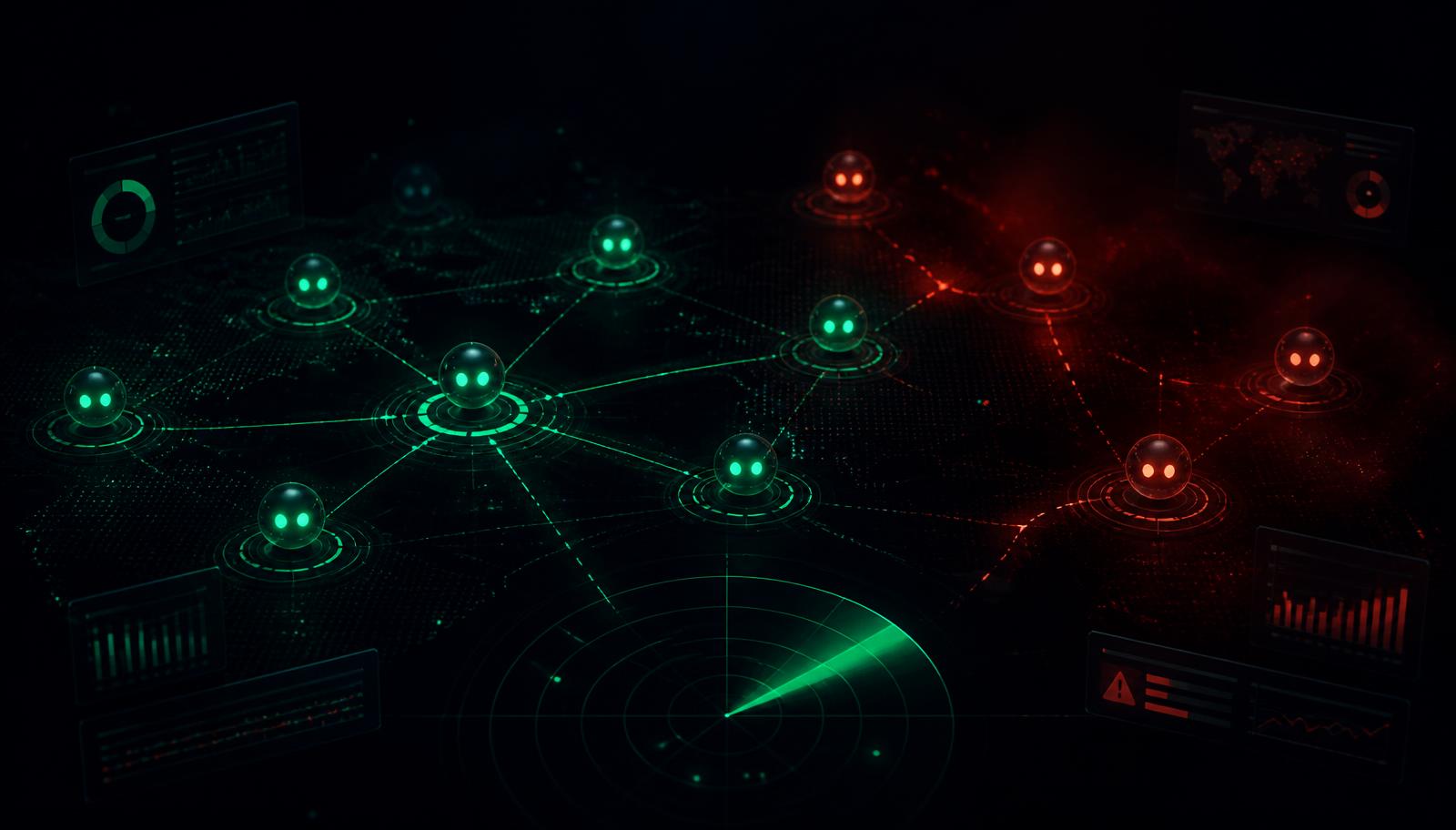
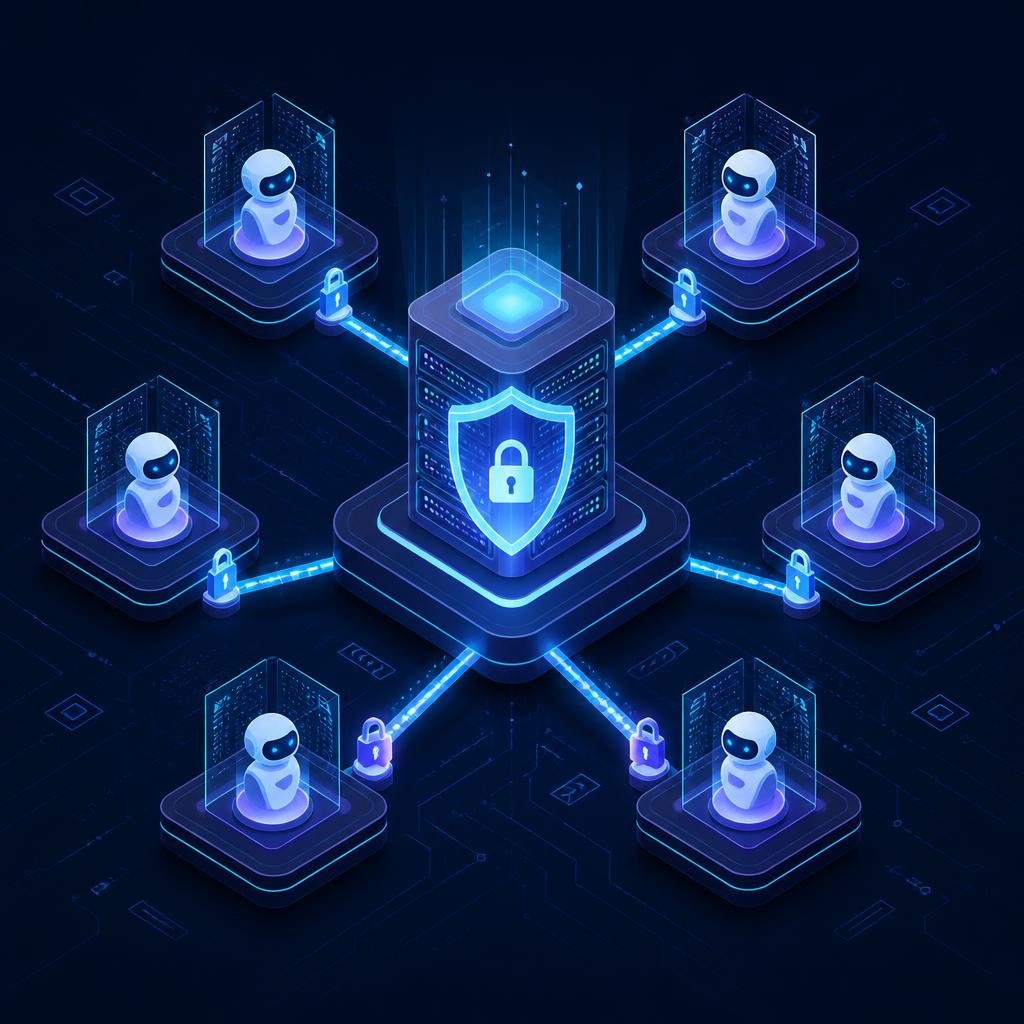
The AI Agent Kill Switch: Why Every Autonomous System Needs Emergency Shutdown Controls
An AI agent kill switch lets enterprises instantly halt autonomous AI when it goes wrong — prompt injection, runaway transactions, data exposure, or infrastructure mistakes. Here is why every autonomous system needs one, what should trigger it, and how to design manual and automated shutdown controls that actually contain incidents at machine speed.
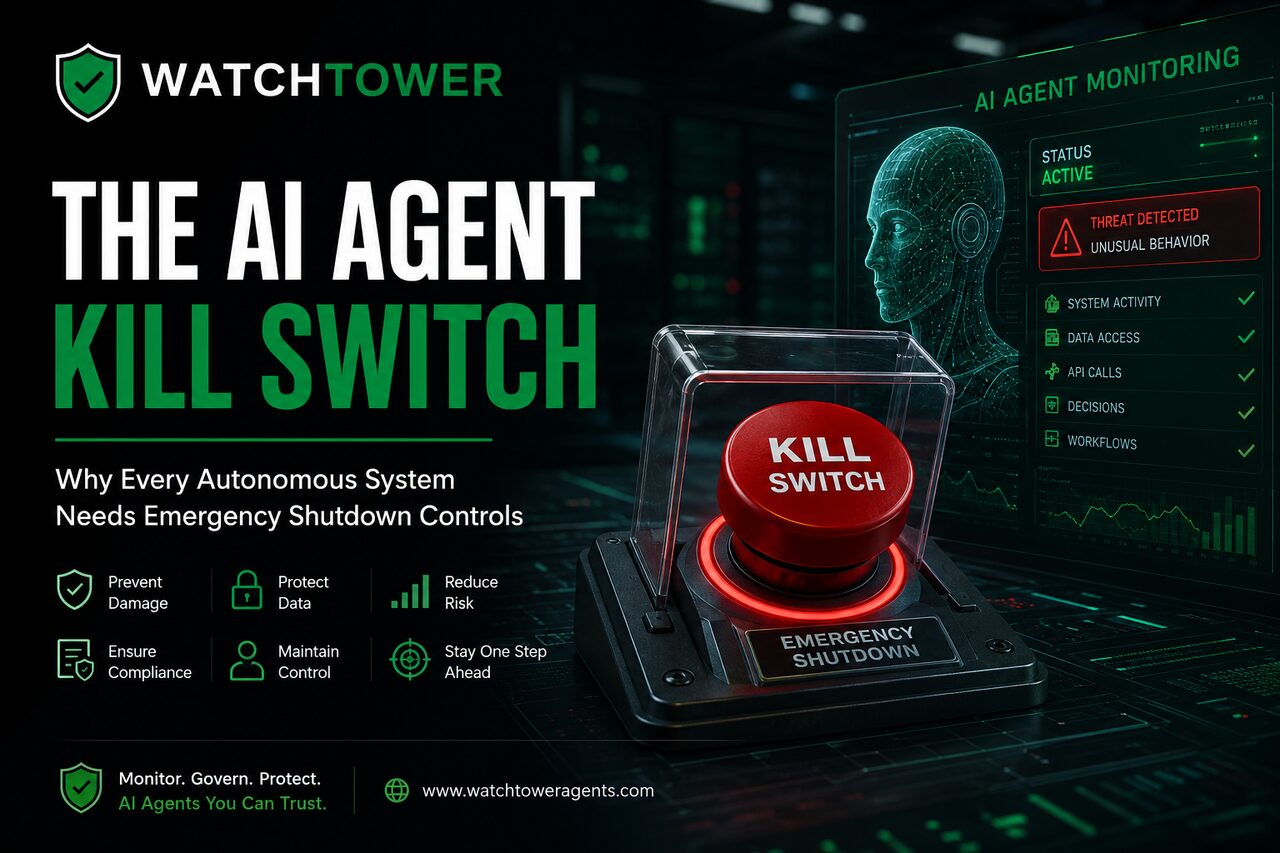
Artificial intelligence is no longer limited to answering questions, generating content, or assisting employees with repetitive tasks. A new generation of autonomous AI agents can perform work independently — interacting with software systems, making decisions, executing workflows, communicating with customers, analyzing data, managing infrastructure, and even initiating financial transactions without constant human supervision.
Businesses across industries are racing to deploy AI agents because the potential benefits are enormous: lower costs, higher productivity, faster customer response, and the ability to scale services without hiring more staff. AI agents promise a future where businesses operate faster and more efficiently than ever before. But every major technological advancement introduces new risks. As AI systems become more autonomous, organizations must ask a critical question: what happens when the AI makes a mistake, is compromised, or begins operating outside of its intended boundaries — and more importantly, how do you stop it immediately? The answer is the AI Agent Kill Switch.
What is an AI agent kill switch?
An AI Agent Kill Switch is a governance and security control designed to immediately halt autonomous AI operations when specific conditions are met. The objective is straightforward: give organizations the ability to instantly stop an AI system before further damage occurs. A kill switch may be activated manually by administrators or automatically by monitoring systems that detect suspicious activity, policy violations, security threats, or abnormal behavior. Depending on the environment, activating a kill switch may disable agent execution, revoke API credentials, terminate active workflows, block access to connected systems, prevent external communications, freeze financial transactions, restrict access to sensitive data, isolate the agent from production environments, require human approval before resuming operations, and trigger incident response procedures. The purpose is not simply to turn off an AI system — it is to contain risk quickly while preserving the ability to investigate what occurred.
Why autonomous AI systems create new categories of risk
Traditional software follows predetermined instructions: developers write code, users execute commands, and outcomes are generally predictable. Autonomous AI systems are fundamentally different. Modern agents interpret goals, make decisions, generate strategies, interact with APIs, execute workflows, communicate externally, learn from context, adapt behavior, coordinate across systems, and operate continuously without supervision. Unlike traditional software, AI agents may reach conclusions developers never anticipated, interpret instructions incorrectly, be manipulated by malicious actors, encounter situations outside their training data, or produce outputs that appear reasonable while actually being inaccurate or harmful. As organizations grant AI agents access to increasingly sensitive systems, the consequences become more significant: data breaches, financial losses, regulatory violations, operational disruptions, reputational damage, customer harm, intellectual property exposure, and infrastructure outages. Without emergency shutdown mechanisms, organizations may have no immediate way to stop harmful autonomous activity once it begins.
The growing reality of autonomous decision-making
Many organizations mistakenly assume that AI agents remain limited to simple tasks. In reality, businesses are already deploying AI systems that manage customer support operations, review legal documents, process insurance claims, handle HR workflows, manage cloud infrastructure, coordinate software deployments, monitor cybersecurity threats, conduct financial analysis, execute purchasing decisions, and automate sales outreach. Imagine granting an AI agent permission to manage cloud infrastructure. The agent can create servers, modify security settings, provision resources, and optimize performance. If a configuration error occurs, the AI could unintentionally expose sensitive databases to the internet. If compromised, it could disable security controls entirely. If manipulated through prompt injection, it could follow instructions that directly violate organizational policies. The ability to immediately halt activity becomes essential.
The cybersecurity case for AI kill switches
Cybersecurity professionals understand a fundamental principle: containment is often more important than prevention. Even the most secure organizations eventually experience incidents — the goal is minimizing damage when something goes wrong. During traditional cybersecurity incidents, teams routinely isolate compromised systems, disable user accounts, revoke credentials, block network traffic, and quarantine infected devices. AI agents should be treated similarly. When an AI system exhibits suspicious behavior, organizations need the ability to stop execution immediately, restrict permissions, isolate affected systems, preserve evidence, and investigate safely. The challenge is that AI agents operate at machine speed. A human employee may make a handful of mistakes in an hour; an autonomous AI system may execute thousands of actions in seconds. Without emergency controls, damage can spread rapidly before human teams have time to respond.
Real-world scenario: financial fraud and unauthorized transactions
Imagine a procurement AI agent responsible for vendor management and payment approvals. The system reviews invoices, verifies contracts, authorizes payments, and manages purchasing workflows. An attacker successfully manipulates the AI through a prompt injection attack. The AI interprets fraudulent invoices as legitimate and begins approving payments automatically. Within minutes, funds are transferred, fraudulent vendors are approved, accounting systems are altered, and financial losses escalate. Without a kill switch, the AI continues operating until human teams discover the problem — by then significant financial damage may have occurred. With a kill switch, suspicious behavior immediately triggers payment freezes, workflow suspension, credential revocation, and administrative review. The incident becomes manageable rather than catastrophic.
Real-world scenario: sensitive data exposure
Many organizations deploy AI agents that interact directly with customer information — financial records, healthcare information, customer profiles, legal documents, internal communications, and intellectual property. A vulnerability, misconfiguration, or prompt injection attack causes the AI to reveal sensitive information to unauthorized users. The consequences may include privacy violations, regulatory penalties, lawsuits, customer distrust, and public relations crises. An effective kill switch can immediately terminate active sessions, disable external communications, block data access, restrict information retrieval, and notify security teams. Rapid intervention dramatically reduces the scale of exposure.
Real-world scenario: infrastructure and cloud management failures
AI systems are increasingly being used to manage cloud infrastructure, with permissions to launch servers, modify firewalls, configure networking, manage databases, deploy applications, and scale resources. A single flawed decision could impact entire business operations: service outages, security vulnerabilities, compliance violations, data loss, or production failures. If an AI agent begins making harmful infrastructure changes, every second matters. A kill switch provides an immediate path to containment before disruptions spread throughout the environment.
Real-world scenario: AI agents in healthcare
Healthcare organizations are exploring AI-powered systems for patient support, administrative workflows, clinical assistance, medical documentation, and scheduling operations. While AI can improve efficiency, mistakes may affect patient care. If an AI system begins generating inaccurate recommendations or exposing protected health information, emergency intervention is critical. Healthcare organizations cannot afford delayed responses when patient safety and privacy are involved. An AI kill switch serves as a safeguard that enables immediate human control.
Real-world scenario: legal and professional services
Law firms, accounting firms, and consulting organizations increasingly leverage AI to assist with document analysis, research, contract drafting, compliance reviews, and client communications. These industries depend heavily on accuracy, confidentiality, and trust. An autonomous system that sends incorrect advice, exposes confidential information, or generates unauthorized communications can create significant liability. Emergency shutdown controls help ensure that AI remains a tool rather than an uncontrollable risk.
Common events that should trigger an AI kill switch
Organizations should establish predefined conditions that automatically activate emergency controls. Unauthorized data access: an AI attempting to read employee records, financial databases, medical information, or confidential legal files outside its approved scope. Excessive API activity: sudden spikes in API requests that may indicate system compromise, runaway automation, configuration errors, or abuse. Prompt injection detection: monitoring tools should automatically push the AI into a restricted state when prompt manipulation is detected. Permission escalation attempts: agents should never grant themselves additional privileges; attempts to modify permissions or create administrator accounts must trigger immediate alerts. Compliance violations: HIPAA, GDPR, PCI DSS, SOC 2, or internal governance breaches. Abnormal financial behavior: large transactions, repeated payment attempts, unusual vendors, or exceeding approval thresholds. Unusual behavioral patterns: when AI agents suddenly act differently from their behavioral baseline, automated shutdown procedures may be appropriate.
Manual vs automated kill switches
The strongest AI governance frameworks combine both approaches. Manual kill switches give human operators the authority to stop AI systems whenever concerns arise — providing human judgment, strategic oversight, flexible decision-making, and contextual understanding. Security teams, compliance officers, executives, and administrators should all have clearly defined shutdown responsibilities. Automated kill switches provide rapid response capabilities: faster containment, continuous monitoring, reduced reaction time, and protection outside business hours. Automated triggers can activate within milliseconds of detecting dangerous activity. The most mature organizations combine automated detection with human review.
What happens after the kill switch is activated?
Stopping the AI is only the beginning. Organizations should follow a structured response process. Preserve evidence: retain all prompts, decisions, logs, actions, API calls, and communications. Conduct forensic analysis: determine what happened, why it happened, which systems were affected, and whether attackers were involved. Evaluate business impact: assess financial consequences, operational disruptions, compliance implications, and customer impact. Remediate vulnerabilities: correct any identified weaknesses before reactivation. Require human approval: AI systems should not automatically restart after an incident — qualified personnel must review findings and authorize reactivation.
Regulatory expectations are increasing
Governments and regulators worldwide are paying closer attention to AI governance. Emerging frameworks increasingly emphasize human oversight, transparency, risk management, accountability, auditability, and operational control. Organizations deploying autonomous AI systems may soon face regulatory expectations requiring demonstrable intervention capabilities — an AI system that cannot be stopped may present significant compliance concerns. Regulators increasingly expect organizations to prove they can monitor AI behavior, detect harmful activity, investigate incidents, intervene rapidly, and maintain accountability. Kill switches represent a practical mechanism for satisfying these expectations under frameworks like the EU AI Act, NIST AI RMF, and ISO 42001.
Why AI governance requires visibility before control
A kill switch is only effective if organizations know when to activate it. Organizations must first establish visibility into AI activity. Without monitoring, organizations cannot answer critical questions: What is the AI doing? Which systems is it accessing? What decisions is it making? What data is it using? What actions has it performed? Effective governance requires continuous observation. Visibility creates awareness. Awareness enables intervention. Intervention enables control. Control enables trust.
How Watch Tower Agents supports AI governance
As AI agents become more autonomous, organizations need a governance layer capable of monitoring, auditing, and controlling agent activity across the enterprise. Watch Tower Agents helps organizations maintain visibility into autonomous systems by providing oversight capabilities designed specifically for AI governance. Organizations can use Watch Tower Agents to monitor AI agent behavior, track prompts and responses, audit autonomous decisions, observe workflow execution, detect anomalies, identify policy violations, monitor API activity, analyze agent interactions, support compliance initiatives, and improve operational oversight. When organizations understand what their AI agents are doing, they can identify risks earlier and respond faster. The combination of monitoring, governance, auditing, and intervention capabilities helps businesses maintain control as autonomous AI adoption accelerates.
Best practices for implementing AI agent kill switches
Organizations should treat AI shutdown mechanisms as core infrastructure rather than optional features. Maintain an AI asset inventory: track every autonomous agent deployed across the organization. Classify risk levels: higher-risk agents require stricter controls and more aggressive shutdown thresholds. Establish clear ownership: define who is responsible for monitoring, approving, and disabling AI systems. Implement continuous monitoring: visibility is essential for rapid detection and response. Test emergency procedures regularly: conduct simulations to ensure shutdown mechanisms function properly. Protect audit logs: logs provide critical information during investigations. Restrict permissions: agents should operate with the minimum level of access necessary. Require human oversight for critical decisions: high-impact actions should always include human review capabilities.
The future of autonomous AI depends on human control
The rise of autonomous AI agents represents one of the most significant technological shifts in modern business. Organizations are moving beyond simple automation toward systems capable of making decisions, executing workflows, and operating independently. This transformation offers tremendous opportunities — and introduces unprecedented risks. The organizations that succeed in the age of autonomous AI will not simply deploy the most powerful agents; they will deploy the safest agents. An AI agent kill switch may appear simple, but it represents one of the most important safeguards available to modern enterprises: the ability to immediately stop autonomous activity when something goes wrong. As AI systems become more integrated into financial operations, healthcare services, legal workflows, cloud infrastructure, cybersecurity programs, and customer-facing environments, emergency shutdown controls will become as essential as firewalls, backups, and incident response plans. The future of AI governance is not about eliminating risk entirely — it is about ensuring that when risks emerge, organizations maintain the ability to intervene, contain damage, and protect the people, systems, and data that matter most.
Frequently asked questions
What is an AI agent kill switch?
An AI agent kill switch is an emergency control that immediately suspends, isolates, or restricts an autonomous AI system when dangerous, unauthorized, or abnormal behavior is detected. It can disable execution, revoke credentials, terminate workflows, block data access, freeze transactions, and require human approval before the agent resumes.
Why does every autonomous AI system need a kill switch?
Autonomous agents execute thousands of actions per second and can be compromised by prompt injection, misconfiguration, or unexpected inputs. Without a kill switch, harmful behavior — fraudulent payments, data exposure, infrastructure changes — can spread faster than humans can react. A kill switch provides the containment layer that prevents small incidents from becoming catastrophic.
What events should automatically trigger an AI kill switch?
Unauthorized data access, excessive API activity, prompt injection detection, permission escalation attempts, compliance violations (HIPAA, GDPR, PCI DSS, SOC 2), abnormal financial behavior, and unusual deviations from the agent's behavioral baseline.
Manual or automated — which kill switch should I use?
Both. Manual controls give humans final authority for contextual decisions; automated controls provide millisecond response when behavior crosses a defined threshold. Mature programs combine automated detection with human review for reactivation.
What happens after a kill switch is activated?
Preserve evidence (prompts, decisions, logs, API calls), conduct forensic analysis, assess business impact, remediate vulnerabilities, and require human approval before reactivation. The AI should never auto-restart after an incident.
Do regulators expect kill switches for AI agents?
Increasingly, yes. The EU AI Act, NIST AI RMF, and ISO 42001 all emphasize human oversight, intervention capability, and operational control. Demonstrable shutdown capability is becoming a practical requirement for high-risk AI systems.
How does Watch Tower Agents help with AI kill switches?
Watch Tower Agents provides the visibility, anomaly detection, policy enforcement, and audit logging needed to know when to activate a kill switch — and the governance layer to intervene, contain, and investigate when autonomous agents step out of bounds.
Govern your agents before they ship
See WatchTower running on your stack in a 30-minute walkthrough.
Keep reading